Your Mouth, Your Shield: The Emerging Science of Oral Health and Immune Function
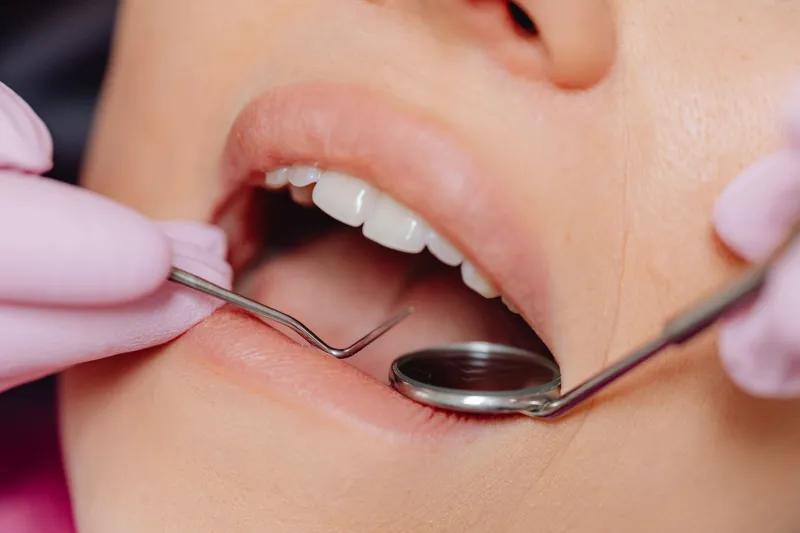
There is a particular kind of artistry in the way the human body integrates its systems — each organ, each tissue, each microscopic process contributing to a composition far greater than the sum of its parts. The mouth, long regarded primarily through the lens of aesthetics and function, is increasingly understood to be one of the most consequential instruments in that larger symphony. Emerging science has made clear that the health of your oral cavity does not remain contained within it. It speaks directly to your immune system, and your immune system listens.
At Artisan Dental Studio, our philosophy has always centered on the idea that a beautiful smile is, at its core, a healthy one. The research emerging from immunology, periodontology, and systemic medicine reinforces that principle with striking clarity.
The Oral Microbiome: A Community With Consequences
The human mouth harbors more than 700 distinct species of bacteria, forming what scientists call the oral microbiome. Under healthy conditions, this community exists in a carefully maintained balance — beneficial microorganisms keeping opportunistic pathogens in check, much like a well-curated ecosystem. When that balance is disrupted, however, the consequences extend well beyond the gum line.
Periodontal disease, which affects nearly half of American adults over the age of 30 according to the Centers for Disease Control and Prevention, is fundamentally an inflammatory condition triggered by pathogenic bacteria accumulating in the spaces between teeth and gums. As these bacteria proliferate, they provoke a chronic immune response — one that, over time, the body struggles to resolve. This sustained state of low-grade inflammation is not merely a local inconvenience. It generates pro-inflammatory cytokines and other signaling molecules that enter the bloodstream, effectively broadcasting distress signals throughout the body.
Inflammation as a Shared Language
To understand why this matters, it helps to appreciate how the immune system communicates. Inflammation is one of its primary dialects — a necessary, protective response under acute circumstances, but a destructive one when it becomes chronic. When periodontal disease keeps the immune system in a perpetual state of low-level activation, the body's defense resources are continuously diverted. The immune system, like any overtaxed institution, becomes less precise and less effective at its core mission.
Research published in journals including the Journal of Clinical Periodontology and Nature Immunology has documented pathways through which oral pathogens — most notably Porphyromonas gingivalis — can modulate immune regulation in ways that extend far beyond the oral cavity. This particular bacterium has been implicated not only in periodontal destruction but in the dysregulation of immune checkpoints associated with conditions including rheumatoid arthritis, cardiovascular disease, and Type 2 diabetes.
The mechanism is not merely coincidental overlap. Studies suggest that P. gingivalis can actively manipulate complement pathways — a critical component of innate immunity — essentially teaching the immune system to stand down at precisely the moments it should be most vigilant.
The Autoimmune Dimension
Perhaps the most compelling frontier in this area of research involves the relationship between oral inflammation and autoimmune conditions. For individuals already navigating diagnoses such as lupus, Sjögren's syndrome, or rheumatoid arthritis, the oral-immune connection carries particular weight.
Several studies have found bidirectional relationships between periodontal disease and rheumatoid arthritis, meaning each condition appears to worsen the other. Researchers at Johns Hopkins and other leading institutions have proposed that citrullinated proteins — molecular structures produced during periodontal infection — may serve as triggers for the autoimmune response characteristic of rheumatoid arthritis. In essence, bacteria in the mouth may be inadvertently training the immune system to attack the body's own joint tissue.
This is not a peripheral finding. It is a paradigm-shifting one, suggesting that managing periodontal health may be a meaningful component of managing — or even reducing risk for — certain autoimmune conditions.
Oral Health, Immunity, and Systemic Resilience
Beyond autoimmune conditions, the immune-oral axis has implications for general systemic resilience. A body whose immune resources are perpetually consumed by oral inflammation is, by definition, a body with diminished capacity to respond to other threats — whether those threats are seasonal infections, environmental stressors, or the ordinary cellular repair processes that maintain long-term health.
Research has also illuminated a particularly striking pathway involving the lungs. Aspiration of oral bacteria — an occurrence more common than most people realize, particularly during sleep — has been associated with increased risk of respiratory infections, including pneumonia. For older adults and immunocompromised individuals, this pathway represents a genuinely serious health consideration, one that rigorous oral hygiene and regular professional dental care can meaningfully reduce.
Meanwhile, the gut-oral axis is an area of growing scientific interest. The oral cavity is the entry point of the gastrointestinal tract, and dysbiosis — imbalance in microbial communities — in the mouth has been linked to corresponding imbalances in the gut microbiome. Given the gut's well-established role in immune regulation, this connection adds yet another layer to the argument for treating oral health as a systemic priority.
What This Means for Your Care
Understanding the science is one thing. Translating it into actionable, patient-centered care is another — and this is where the artisan approach becomes essential.
At Artisan Dental Studio, we view comprehensive dental care not as a series of isolated interventions but as an ongoing practice of stewardship over a living, interconnected system. Periodontal evaluations, professional cleanings, and restorative treatments are not merely cosmetic considerations; they are investments in your body's capacity to protect itself. When we address gum disease, we are not simply restoring the appearance of a healthy smile — we are removing a source of chronic immune burden.
For patients managing systemic health conditions, this perspective becomes especially relevant. Open communication between dental professionals and primary care physicians or specialists is increasingly recognized as a best practice, and we encourage our patients to view their dental care as an integrated component of their broader health strategy.
A New Way of Seeing the Smile
The portrait of a healthy smile has always been painted with more colors than most people recognize. Symmetry, brightness, and structural integrity matter — but beneath those visible qualities lies a biological landscape whose condition shapes health outcomes in ways science is only beginning to fully chart.
Your mouth is not separate from your body. It is not a cosmetic feature to be addressed in isolation. It is a living portal — one that, when tended with care and expertise, contributes to a body that is more resilient, more balanced, and more fully capable of thriving.
At Artisan Dental Studio, we believe that the most beautiful smile is one that reflects genuine, deep-seated health. The science of the oral-immune connection gives that belief its most compelling expression yet.