Sibilance and Structure: Reading Your Bite Through the Way You Speak
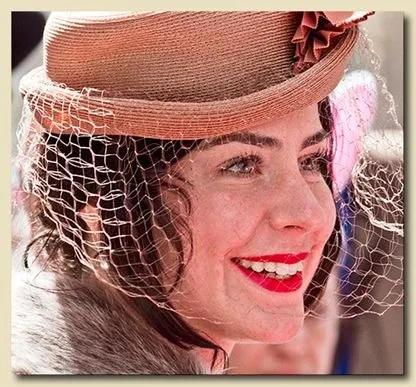
Photo: Allen Lubitz, CC BY 4.0, via Wikimedia Commons
Teeth are usually discussed in terms of appearance, comfort, and function. They are admired in photographs, blamed for sensitivity, and counted on for chewing. Speech rarely enters the conversation.
That omission is worth correcting. Every spoken syllable is a small physical event: an airstream released through a channel that teeth, tongue, palate, and lips construct together, dozens of times per second, without conscious instruction. When the geometry of that channel changes — by a millimeter, sometimes by less — sound changes with it.
For patients, a subtle shift in speech is often the first hint that something in the mouth has moved. For clinicians, it is one of the more underused observations available during a routine examination. Neither party should treat it as a diagnosis. Speech is a clue, and clues deserve careful reading rather than quick conclusions.
Where Air Meets Enamel
Consonants are made by interrupting or narrowing the breath. The front teeth form the narrowest gate in that system, which is why incisal edges, arch shape, and the small spaces between teeth matter so much to how a person sounds.
Consider the sibilants — the sounds written as s, z, sh, zh, and the ch and j pair. Producing them requires the tongue to direct air against the lingual surfaces of the upper incisors at a precise angle. Alter the length of those teeth, their inclination, or the evenness of their edges, and the airstream strikes a different target. The result may be a faint whistle, a lisp, or a sound that seems to spray rather than focus.
Labiodental sounds — f and v — depend on the lower lip meeting the upper incisors. Lengthen those teeth with veneers or crowns and the lip contact changes. Shorten them through wear and the contact weakens. Patients often describe this as 'sounding different on the phone' without being able to explain why.
Then there are the lingua-alveolar sounds: t, d, n, l. These rely on the tongue tip finding the ridge behind the upper incisors. If the anterior teeth move, or if the bite opens even slightly, the tongue must recalibrate its landing point. Most people do this unconsciously and quickly. Some do not.
The Whistle as a Measurement
A whistle on sibilants is among the more specific speech findings in dentistry, and among the easiest to miss. It usually points to a narrow channel or an edge that sits slightly proud — a new ceramic margin, a bonding that was never fully polished, a rotated tooth creating an unintended slit.
It is not always a defect. Some whistles come from natural anatomy and have been present for decades. The useful question is not whether a whistle exists, but whether it is new, and whether it correlates with recent treatment. A whistle that appeared within days of a restoration is a conversation worth having promptly; a whistle that has been there since adolescence is a different matter entirely.
When the Front of the Mouth Changes
Missing anterior teeth produce the most obvious speech effects, largely because the tongue loses a reference point it has relied on for a lifetime. A single absent incisor can turn a crisp s into a diffuse one; a full anterior gap can make f and v difficult to produce at all without visible compensation.
Frontal lisps — where the tongue presses forward against the teeth rather than just behind them — are frequently associated with an anterior open bite, a tongue thrust pattern, or a prolonged oral habit. They are common in childhood and often resolve without intervention. In adults, a newly acquired frontal lisp deserves attention, particularly when it accompanies changes in swallowing or in the resting position of the tongue.
The Back of the Mouth Matters Too
Posterior teeth are rarely credited with much influence on speech, and for good reason: articulation is largely an anterior business. But molars and premolars shape the resonance chamber and give the tongue its lateral boundaries. Extensive posterior tooth loss, or a denture that no longer fits the ridge it was made for, can produce a subtle muffling or a change in timbre that patients describe vaguely as 'not sounding like myself.'
Ill-fitting prostheses produce a recognizable set of complaints: clicking, slurring on longer words, difficulty with the plosive sounds that require a pressure buildup. These are mechanical problems with mechanical solutions, and they are usually correctable.
The Exceptions That Deserve Urgency
Most speech changes encountered in dentistry are gradual, mild, and explainable. A small number are not, and the distinction matters.
Sudden onset of slurred or altered speech in an adult — particularly when paired with facial drooping, arm weakness, or confusion — is a medical emergency and has nothing to do with dentistry at the moment it occurs. Transient episodes warrant the same urgency. Beyond that, progressive speech changes accompanied by tongue weakness, twitching, or difficulty swallowing belong in a physician's office rather than a dental chair.
Between those extremes sits a broad middle ground: changes tied to new restorations, extractions, orthodontic movement, or medication-related dry mouth. These are dental conversations, and they are best had early.
Speech Is a Clue, Not a Diagnosis
It is tempting to reason backward from a sound to a cause. Resist that temptation. Speech production involves the nervous system, the respiratory system, hearing, and learned motor patterns in addition to the teeth. A dentist can identify a plausible mechanical contribution; only a speech-language pathologist can properly assess a speech disorder. The most useful dental contribution is often a careful description — which sounds, since when, under what circumstances — plus a referral when the picture extends beyond the mouth.
A Framework for Raising the Subject
Patients are often reluctant to mention speech. It can feel like a small complaint, or an embarrassing one. A practical structure helps:
- Onset. Was the change sudden or gradual? Did it follow dental treatment, an extraction, an illness, or a new medication?
- Pattern. Which sounds are affected? Are there specific words that reliably trigger it?
- Context. Is it worse when tired, when nervous, in the morning, or after speaking for long periods?
- Companions. Any accompanying jaw fatigue, clicking, bite instability, numbness, or difficulty swallowing?
Recording a short voice memo — reading a paragraph aloud — gives the clinician something to compare against later. It costs nothing and often clarifies more than a verbal description can.
Bringing the Conversation Into the Room
Cosmetic and restorative dentistry is, at its best, an exercise in attentive listening. A patient who mentions that a new crown 'sounds wrong' is not being fussy; they are reporting a functional observation that deserves careful examination and, often, a minor adjustment. A patient whose speech has changed without an obvious dental cause deserves a candid acknowledgment that the question exceeds the scope of the chair.
The smile is the part of the mouth everyone sees. Speech is the part everyone hears. Both are worth the same attention.