Dentistry at Every Chapter: How Your Smile Needs Shift Through Life's Seasons

Photo: multigenerational family smiling together dental health portrait, via www.smiles4oc.com
A smile is not a static thing. It breathes, shifts, and matures alongside the person behind it. The concerns that occupy a twenty-seven-year-old entering the workforce are genuinely different from those of a forty-three-year-old managing a household, and different still from those of a sixty-year-old navigating the natural changes that come with time. Yet many dental practices operate as though oral health exists in a single, unchanging dimension—treating every patient through an identical lens regardless of where they stand in life.
At Artisan Dental Studio, we approach dentistry the way a skilled portrait artist approaches a subject: with deep attention to context, history, and the particular moment being captured. That means recognizing that optimal care is not a fixed formula but a living strategy—one that adapts as your priorities, physiology, and personal narrative evolve.
The Young Professional Years: Building a Smile That Opens Doors
For adults in their mid-twenties through mid-thirties, the smile often functions as a professional and social instrument. Research consistently suggests that first impressions are formed within seconds, and the condition of one's teeth plays a measurable role in how others perceive competence, warmth, and trustworthiness. This is the life stage during which many patients first become genuinely invested in cosmetic dentistry—not out of vanity, but out of a growing awareness that appearance and opportunity are not entirely separate conversations.
Common priorities during these years include teeth whitening, the correction of minor alignment issues, and addressing any cosmetic concerns—chipped edges, uneven spacing, or discoloration—that were previously tolerated but now feel consequential. For patients who completed orthodontic treatment in adolescence, this is also the window in which retention habits can slip, making periodic assessment particularly valuable.
Preventive care forms the invisible foundation of everything else. Establishing consistent hygiene appointments, understanding one's cavity risk profile, and addressing early signs of grinding or clenching before they cause structural damage are investments that pay compounding dividends. A small restoration addressed promptly at twenty-eight is a far less complex matter than the same issue left unattended until thirty-eight.
The Middle Chapters: Balancing Personal and Family Dental Health
The years between thirty-five and fifty-five often arrive with a particular kind of compression. Careers are in full motion. Children may be navigating their own orthodontic timelines. Aging parents may require additional attention. In this season of life, personal dental care can quietly slip down the priority list—a pattern that carries real consequences.
Physiologically, this period introduces changes that deserve careful monitoring. Gum health becomes increasingly significant, as periodontal disease tends to progress gradually and silently. Hormonal shifts—particularly for women during perimenopause—can affect bone density and soft tissue health in ways that have direct oral implications. Restorations placed years earlier may be approaching the end of their functional lifespan, warranting evaluation and, in some cases, replacement.
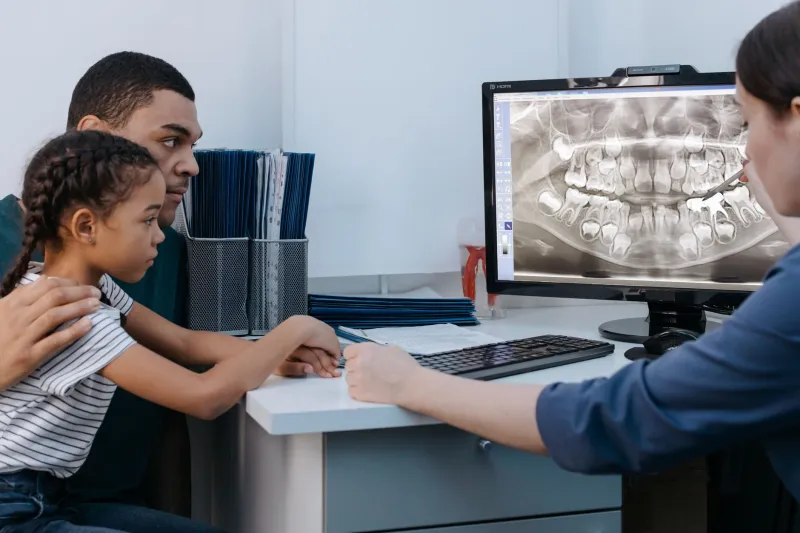
For patients managing family dental care alongside their own, a practice that understands the full arc of dental development—from pediatric concerns to adult restoration—offers a particular kind of continuity. It means your child's emerging bite and your own evolving crown work can be understood as part of a coherent, interconnected picture rather than isolated clinical episodes.
This is also the stage during which many patients begin exploring more substantive cosmetic or restorative work—not because they are chasing youth, but because they have arrived at a point of self-awareness and financial readiness that makes meaningful investment feel right. A smile makeover undertaken at forty-five, designed with care and precision, can be one of the most personally significant decisions a patient makes.
The Mature Years: Preserving What You Have, Restoring What Time Has Taken
After fifty-five, the clinical picture shifts again. Enamel, accumulated wear, and the long-term effects of diet, habits, and previous dental work all converge. Teeth may appear shorter, darker, or more irregular than they once did. Gum recession can expose root surfaces, altering both aesthetics and sensitivity. Bone loss, dry mouth related to medications, and the increased complexity of existing restorations become routine considerations rather than exceptional ones.
None of this is cause for resignation. Quite the opposite: modern restorative dentistry offers extraordinary tools for addressing age-related changes with both precision and artistry. Dental implants can replace missing teeth in a manner that preserves jaw structure and restores full chewing function. Porcelain restorations can be crafted to reflect the natural character of mature teeth—subtly luminous rather than artificially bright, shaped to complement an experienced face rather than mimic the smile of a twenty-year-old.
The artistry in treating mature patients lies in understanding the difference between restoration and imitation. The goal is not to reverse time but to honor the person as they are now—to create a smile that is healthy, functional, and genuinely beautiful in the context of their present life.
The Through-Line: Continuity as a Form of Care
What distinguishes truly exceptional dental care across all of these chapters is not simply technical skill, though skill is essential. It is the capacity to see a patient as a whole person moving through time—to understand where they have been, where they are now, and where they are going. A practice that has treated you at thirty is positioned to make far more nuanced decisions at fifty, because the history is known and the relationship is real.
At Artisan Dental Studio, this longitudinal perspective is not incidental—it is central to our philosophy. We believe that the most meaningful dental care is not reactive but anticipatory: identifying what is coming before it arrives, and preparing accordingly. Whether you are in the early chapters of your professional life, navigating the complex middle years, or entering a season that calls for thoughtful restoration, our approach adapts to meet you precisely where you are.
Your smile has its own story. We are here to help you tell it well—at every stage.