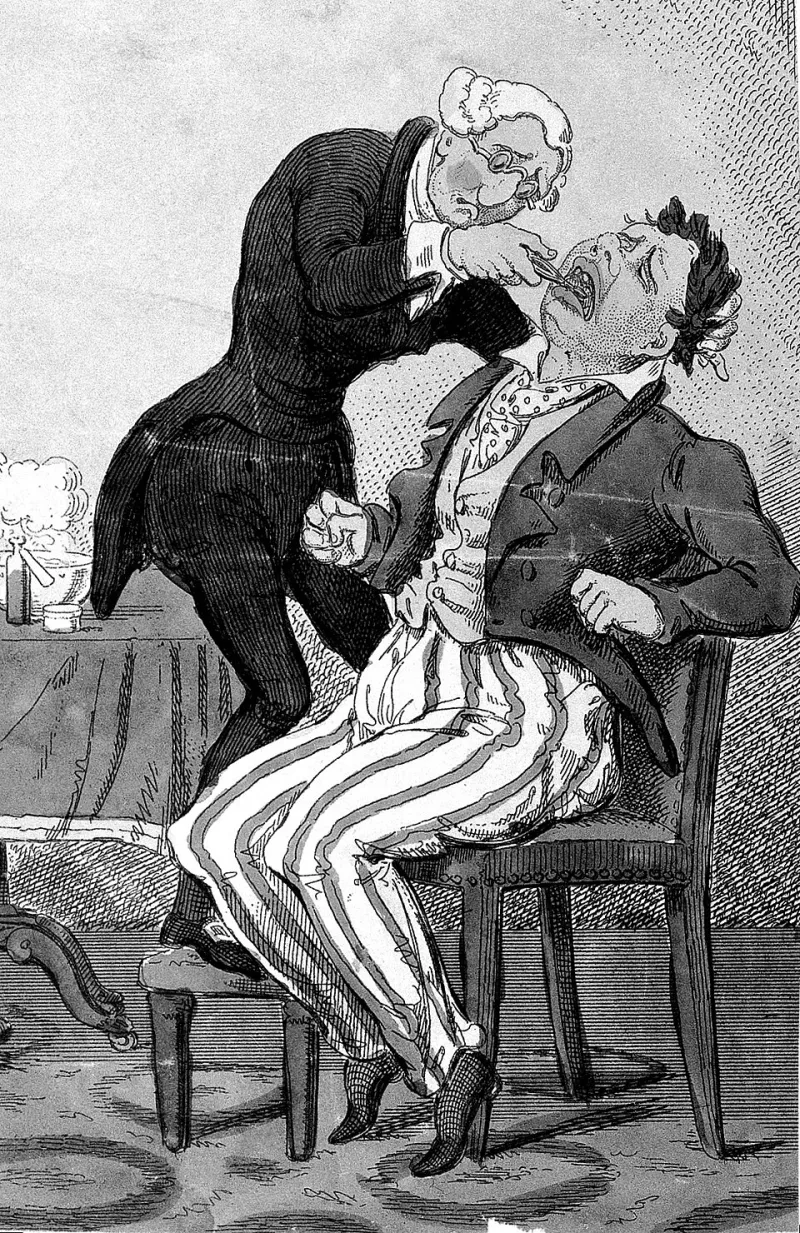
The Graceful No: Why Cosmetic Restraint Is a Signature of Serious Craft

Photo: Shixart1985, CC BY 2.0, via Wikimedia Commons
There is a sentence that skilled cosmetic dentists say often and that almost no marketing photograph captures: 'Not yet.'
It is not a refusal. It is not a rejection of the patient's ambition, and it is not modesty. It is a clinical judgment about sequence, and it is one of the clearest signals that a practice is thinking beyond the next invoice.
Cosmetic dentistry has never been more accessible in the United States, and that accessibility is largely good news. But the commercial surface of the field — same-day smile offers, direct-to-consumer aligners, weekend veneer courses, financing plans marketed like consumer electronics — has created an incentive structure in which 'yes' is cheap and 'wait' is expensive. Patients deserve to know the difference.
The Case for Sequence
A smile makeover is a stack of decisions, and the order matters more than any single choice. Periodontal health comes before porcelain. Caries control comes before contour. Bite stability comes before aesthetics, because aesthetics built on an unstable bite do not survive.
When a patient arrives with active gum inflammation and asks about veneers, the honest answer is that the veneers can wait six weeks. Those weeks are not lost time; they are the difference between restorations placed on a foundation that holds and restorations placed on a foundation that continues to move. Tissue that is not healthy when impressions are taken will not become healthy because the margins are beautiful.
The Line That Cannot Be Uncrossed
Nearly everything in cosmetic dentistry involves removing something. Enamel, once prepared, does not return. A tooth reduced for a full-coverage crown will need a crown for the rest of its service life. That is not a reason to avoid treatment; it is a reason to be certain about timing.
This is where the phrase 'we could do this now, but' earns its place. A dentist who explains the irreversibility of preparation, the realistic lifespan of the material, and the maintenance the restoration will require is not talking themselves out of work. They are describing the actual transaction.
When 'Not Yet' Is a Complete Plan
Restraint without a plan is merely delay. The distinction is simple: a good deferral comes with a date, a criterion, and a path.
'Not yet' should sound like this: complete the periodontal therapy, re-evaluate in eight weeks, and if the tissue is stable, scan for the upper anterior units in the spring. It should include what would change the recommendation, and what the patient can do in the meantime — whitening before shade matching, orthodontic alignment before bonding, a night guard before any incisal lengthening in a patient with visible wear facets.
A practice that cannot articulate the interim steps is not practicing restraint. It is practicing avoidance, which is a different and far less honorable thing.
The Trend Cycle and Its Casualties
Every few years a technique arrives with a compelling before-and-after gallery and very little long-term data. Minimal-prep veneers marketed as 'no-drill' are a useful example: in carefully selected cases with adequate enamel and favorable tooth position, they can be excellent. In a patient with rotated teeth, a deep bite, or worn enamel, the same approach can produce bulky restorations, compromised margins, and a result that photographs well and functions poorly.
The pattern repeats across the field. Alignment offered without radiographs. Bonding applied over active decay. Whitening used to mask a shade problem that is actually a structural one. None of these approaches is inevitably wrong. All of them are wrong when diagnosis has been skipped in favor of the procedure.
The Economics Nobody Prints on the Brochure
It would be naive to pretend that restraint is cost-free for a practice. Chair time is expensive, equipment is financed, and staff are paid whether or not a case is scheduled today. A practice that says 'wait' is choosing a longer, slower relationship over a faster transaction.
That choice is worth noticing as a patient, because it is difficult to fake. A sales-oriented practice tends to answer hesitation with urgency: today's pricing, this month's availability, a discount that expires. A clinically oriented practice answers with information, a written plan, and the explicit freedom to think it over.
What a Graceful No Sounds Like
Patients can learn to hear the difference between a 'no' that protects them and a 'no' that reflects a lack of capability. The former is specific, anchored to clinical findings, and paired with alternatives. The latter is vague, hurried, and often followed by a referral that never quite materializes.
A protective deferral typically includes three elements: the finding that justifies waiting, the consequence of proceeding anyway, and the condition under which the plan would change.
Questions Worth Asking
- What happens if we do nothing for six months?
- Which parts of this plan are reversible, and which are permanent?
- What is the expected lifespan of each restoration, and what will replacement cost?
- What would you recommend if cost were not a consideration?
- What would you recommend if this were your own tooth?
- Who will actually perform each stage of the work?
- If I want a second opinion, will you send the records?
The last question is the most revealing. A practice confident in its reasoning will forward the radiographs without hesitation.
Trust Is the Only Durable Asset
Cosmetic dentistry is a craft, and crafts are judged over time. The veneer that looked superb in the mirror on placement day is not the measure. The measure is how it looks and functions in year eight, and whether the patient felt informed at every step along the way.
That is why the graceful no matters. It is the moment a patient learns whether they are being treated as a case to be completed or a person to be cared for. The answer to that question shapes everything that follows.