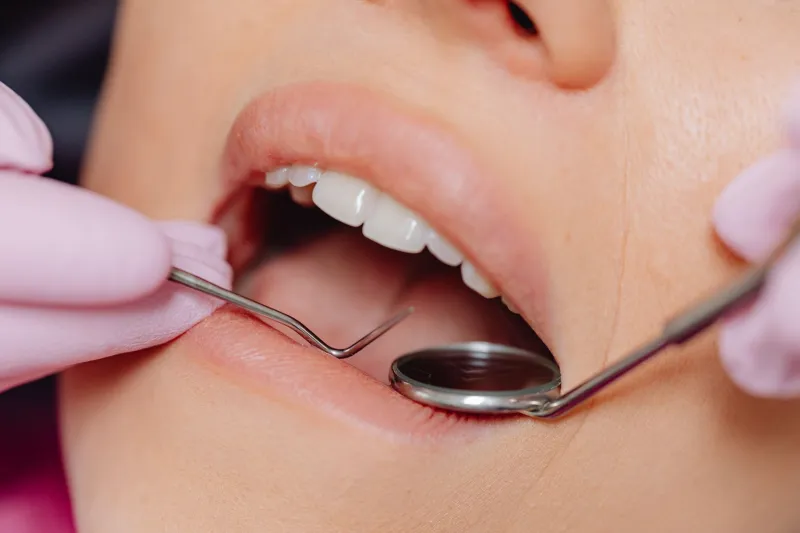
The Gum Line Reimagined: How Soft Tissue Sculpting Transforms Smiles From the Foundation Up
Every great composition has a frame. In architecture, it is the surrounding structure that gives a building its context. In portraiture, it is the negative space that defines the subject. In the human smile, that frame is the gum line — and yet it is the element most frequently ignored when patients begin thinking about cosmetic improvement.
At Artisan Dental Studio, we have seen this pattern repeat itself with remarkable consistency. A patient arrives convinced that their teeth are the problem. They describe their smile as "too short" or "uneven" or simply "not quite right" in a way they struggle to articulate. After a thorough aesthetic evaluation, the answer becomes clear: the teeth themselves are often fine. It is the tissue surrounding them that has been quietly undermining the entire composition.
Gum contouring — the precise reshaping of gum tissue to improve the proportion, symmetry, and overall aesthetic of the smile — is a procedure that has the power to reframe everything. And in many cases, it does so without touching a single tooth.
Understanding Gum Architecture and Why It Matters
The gum line functions as the visual baseline of the smile. It establishes how much of each tooth is visible, how symmetrical the overall appearance is, and how harmoniously the soft tissue relates to the teeth it surrounds.
When gum tissue is excessive or unevenly distributed, it creates what is commonly described as a "gummy smile" — a presentation in which the teeth appear shorter than they are, the smile looks crowded, or the overall impression is one of imbalance. Even when individual teeth are perfectly shaped and well-shaded, an irregular gum line can undermine the entire aesthetic.
Conversely, gum recession — the gradual drawing back of tissue that exposes more of the tooth root — creates a different set of concerns. Teeth appear elongated, the smile takes on an aged quality, and in more advanced cases, sensitivity and structural vulnerability become clinical concerns as well.
Between these two extremes lies the spectrum of gum architecture that cosmetic and restorative dentists evaluate when designing a smile. The ideal gum line follows a specific anatomical logic: the tissue peaks at the distal aspect of the upper canines and the central incisors, with the lateral incisors sitting slightly lower. This pattern creates the gentle, rhythmic scalloping that characterizes a naturally beautiful smile.
When that pattern is disrupted — by genetics, periodontal history, medication side effects, or simple individual variation — the smile's visual rhythm breaks down.
Cosmetic Versus Clinical Gum Contouring: A Critical Distinction
Gum contouring is performed for two distinct categories of reasons, and understanding the difference matters both clinically and for insurance purposes.
Cosmetic gum contouring addresses tissue that is healthy but aesthetically unfavorable. The gum is not diseased; it is simply positioned in a way that compromises the smile's appearance. This category of treatment is elective by definition and is typically not covered by dental insurance.
Clinical gum contouring, often referred to as crown lengthening, serves a functional or restorative purpose. When a tooth is too short to support a crown, when decay or a fracture extends beneath the gum line, or when gum overgrowth (hyperplasia) creates hygiene challenges, reshaping the tissue becomes a clinical necessity. In these contexts, the procedure may be partially covered depending on the patient's plan and the documented medical rationale.
The two categories frequently overlap. A patient undergoing crown lengthening for restorative reasons may simultaneously benefit from aesthetic refinements. A patient pursuing purely cosmetic contouring may discover underlying tissue health concerns that warrant clinical attention. This is one of the many reasons a thorough evaluation — not simply a visual assessment — is essential before any soft tissue procedure.
What the Procedure Actually Involves
Modern gum contouring is performed using one of several tools: a soft tissue laser, a radiosurgery unit, or traditional surgical instruments. Laser-based techniques have become the standard in many cosmetic practices due to their precision, their ability to simultaneously sculpt and cauterize tissue, and their generally favorable recovery profiles.
The procedure begins with local anesthesia to ensure patient comfort throughout. The clinician then follows a pre-planned design — often developed with the aid of digital imaging or a diagnostic mock-up — to remove or reposition tissue with controlled, incremental precision. The goal is not simply to reduce the gum line but to create a specific aesthetic result: one that is proportionate, symmetrical, and consistent with the patient's facial anatomy.
Treatment time varies depending on the extent of reshaping required. Minor contouring affecting two or three teeth may be completed in under an hour. More comprehensive cases involving the full arch require additional time and, in some instances, multiple appointments.
Recovery: What Patients Can Realistically Expect
One of the most common questions patients ask is how long recovery takes. The honest answer is that it depends — on the extent of the procedure, the technique used, and individual healing patterns.
In the days immediately following laser gum contouring, patients typically experience mild to moderate tenderness, some swelling, and heightened sensitivity in the treated areas. Most find that over-the-counter pain management is sufficient, and the majority return to normal daily activities within two to three days.
Complete tissue healing, however, takes longer. Gum tissue matures and settles over several weeks, and the final aesthetic result may not be fully apparent for four to six weeks post-procedure. Patients are generally advised to follow a soft food diet during the initial recovery period and to maintain careful but gentle oral hygiene to protect the healing tissue.
For cases where gum contouring is performed as part of a larger smile makeover — preceding veneers, for example — the sequencing of procedures must account for this healing timeline. Placing restorations before the gum line has stabilized risks an outcome where the final tissue position does not match the restoration margins, requiring additional correction.
The Standalone Transformation
Perhaps the most compelling evidence of gum contouring's power is the patient who arrives expecting to need extensive cosmetic work and leaves having needed only this.
Consider a patient whose teeth are naturally well-shaped and adequately shaded but who has always felt self-conscious about a smile that appears too "toothy" on one side. A careful evaluation reveals that the gum tissue on the right lateral incisor sits approximately 1.5 millimeters lower than its counterpart on the left — an asymmetry invisible to the untrained eye but immediately apparent to the subconscious one. A single, focused contouring session corrects the discrepancy. The patient's existing teeth, unchanged, now read as balanced.
This scenario, repeated in variations across countless patients, illustrates a principle central to the Artisan Dental Studio philosophy: that the most effective cosmetic intervention is not always the most extensive one. Sometimes the greatest transformation begins not with the teeth themselves, but with the living architecture that surrounds them.
A Foundation Worth Considering
If you have been contemplating a smile makeover and find yourself uncertain about where to begin, the gum line is a more logical starting point than most patients expect. Before selecting veneers, before committing to whitening, before any restorative decision is made, the soft tissue framework of your smile deserves careful evaluation.
At Artisan Dental Studio, every aesthetic consultation includes a thorough assessment of gum architecture — not as an afterthought, but as a foundational element of smile design. Because the most beautiful smiles are not simply collections of well-crafted teeth. They are compositions in which every element, including the frame, has been considered with intention.