The Mirror Doesn't Lie, But It May Not Be Telling the Whole Truth
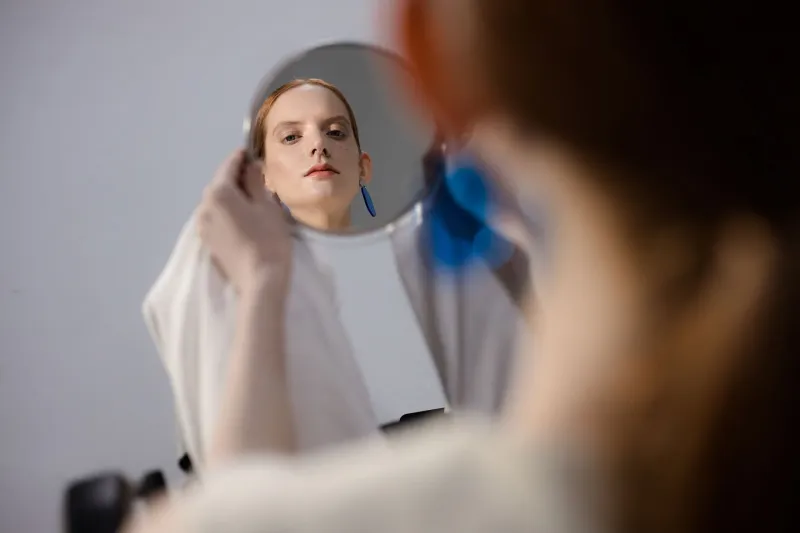
There is a peculiar cruelty in the way self-consciousness works. A person can receive a clean bill of dental health from their dentist, hear that their teeth are structurally sound, and still spend every social interaction acutely aware of the slight overlap on their lower incisors, the faint discoloration of a single lateral tooth, or the way their gum line dips asymmetrically on one side. Objectively, nothing is wrong. Subjectively, everything feels exposed.
This is the smile-confidence gap — the psychological distance between what your teeth actually look like and how they make you feel about yourself. It is not vanity. It is not hypersensitivity. It is, increasingly, something neuroscience can explain.
Why the Brain Amplifies Imperfection
The human brain is not a neutral observer of the self. Research in self-perception psychology consistently demonstrates that individuals fixate on their own perceived flaws far more intensely than outside observers ever do. This phenomenon, sometimes called the spotlight effect, leads people to dramatically overestimate how much others notice and evaluate their imperfections.
When it comes to the smile specifically, the effect is compounded by the smile's unique social role. We smile during introductions, during negotiations, during moments of vulnerability and joy. The smile is one of the most scrutinized features of the human face — not because others are judging it harshly, but because we are conditioned from childhood to understand it as a signal of warmth, confidence, and social belonging.
When that signal feels compromised, even subtly, the brain can enter a low-grade state of social vigilance. A person may begin to smile with their lips closed, to cover their mouth while laughing, to avoid photographs, or to hesitate before speaking in group settings. These micro-adaptations accumulate over years into behavioral patterns that genuinely limit engagement — professionally, socially, and personally.
The Turning Point Is Rarely Dramatic
Patients who ultimately seek cosmetic or restorative care at practices like Artisan Dental Studio rarely describe a single catastrophic moment as their catalyst. More often, the turning point is quiet and cumulative. It is the realization, mid-conversation, that one has not smiled freely in months. It is the photograph from a family gathering that prompts a decision to stop avoiding cameras. It is a promotion interview that went well on paper but felt, internally, like a performance in which one was perpetually managing an unwanted distraction.
One patient, a marketing director in her early forties, described her experience this way: she had been told for years that her teeth were healthy and that her concerns were minor. "But minor to whom?" she asked. "Minor in a clinical chart is not the same as minor in how you walk into a room."
Her observation captures something important. Dentistry, at its most conventional, evaluates the mouth through a clinical lens — decay, structural integrity, periodontal health. These are essential measures. But they do not account for the lived experience of inhabiting a smile that, however healthy, does not feel like an asset.
The Artisan Perspective: Function, Aesthetics, and the Inner Life of a Smile
At Artisan Dental Studio, the philosophy has always been that a smile is simultaneously a biological structure and a deeply personal expression. The science of occlusion, enamel preservation, and tissue health forms the foundation. But the artistry — the careful attention to proportion, symmetry, color, and character — is what allows a smile to become something a patient can inhabit with genuine ease.
This dual commitment shapes every consultation. Rather than beginning with a procedure menu, the conversation begins with a question: how does your smile make you feel, and how would you like it to make you feel? The distinction matters enormously. A patient who feels self-conscious about minor discoloration has a fundamentally different need than one who is managing the functional and aesthetic consequences of years of grinding. Both deserve solutions calibrated to their specific reality, not a generalized treatment pathway.
The tools available in modern cosmetic and restorative dentistry — professional whitening, porcelain veneers, conservative bonding, gum contouring, and clear aligner therapy — are not ends in themselves. They are instruments through which a skilled clinician can help a patient close the gap between the smile they have and the one that allows them to show up fully in their own life.
Confidence Is Not a Cosmetic Outcome
It would be a mischaracterization to frame this conversation as purely aesthetic. The psychological literature on smile confidence connects it to broader markers of well-being, including social engagement, professional performance, and even willingness to seek medical care. People who feel embarrassed by their smiles are statistically less likely to keep dental appointments — a pattern that creates a compounding problem, as avoidance allows minor issues to become significant ones.
Conversely, patients who feel genuinely comfortable with their smiles report behavioral changes that extend well beyond the dental chair. They laugh more freely. They engage more readily. They describe a reduction in the mental overhead of social situations — that background calculation of how to position one's face, when to speak, whether a camera is pointed in one's direction.
This is not the language of cosmetic marketing. It is the language of quality of life.
When to Have the Conversation
If you have found yourself reading this article with a sense of recognition — if the gap between your dental health and your dental confidence feels familiar — it may be time to have a different kind of dental conversation. Not one that begins with X-rays and ends with a cleaning schedule, but one that takes seriously the question of how your smile is serving you in the fullness of your daily life.
The smile-confidence gap is real, it is common, and it is addressable. At Artisan Dental Studio, we approach that conversation with the same care and precision we bring to every clinical procedure — because we understand that the most meaningful outcome of our work is not the one visible under a dental light. It is the one visible in the way a patient walks back out into the world.
Your smile is not simply a collection of teeth. It is one of the primary ways you tell the world who you are. It deserves to feel like yours.