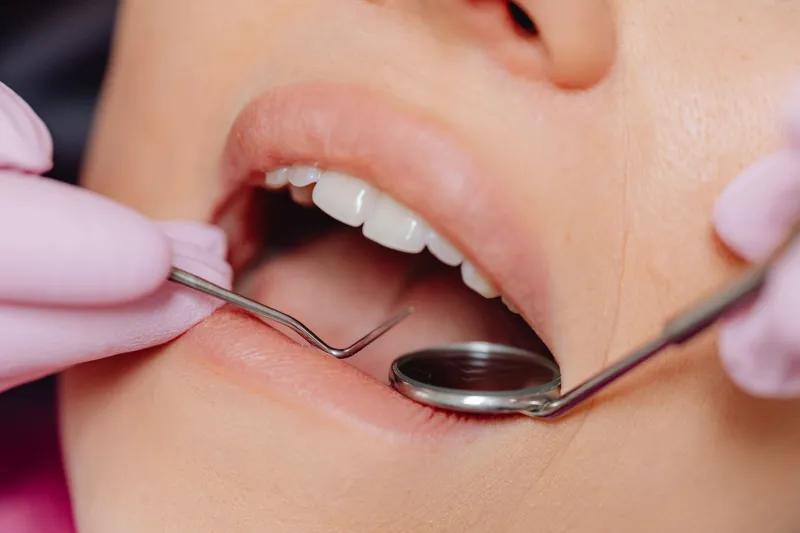
Worry, Avoidance, and Decay: Breaking the Anxiety Loop That Quietly Destroys Your Smile
When Fear Becomes the Diagnosis
There is a quiet irony embedded in dental anxiety that rarely receives the attention it deserves. The very worry that keeps a person away from the dental chair—fear of discovering something wrong, fear of pain, fear of judgment—creates the precise conditions under which something will, in fact, go wrong. This is not a metaphor. It is a measurable, physiological loop with real consequences for the teeth, the gums, and the broader architecture of oral health.
For millions of Americans, anxiety about dental care is not a minor inconvenience. It is an active force shaping the mouth's landscape in ways that compound quietly, year after year, until the gap between the smile one has and the smile one deserves becomes almost impossible to ignore.
Understanding this cycle—how it begins, how it sustains itself, and how it can be interrupted—is among the most important things a person can do for their long-term oral health.
The Neuroscience of Avoidance
Anxiety, at its neurological core, is the brain's threat-detection system working overtime. When the perceived threat is the dental office itself, the amygdala—the brain's alarm center—responds to appointment reminders, toothbrush discomfort, or even passing conversations about dentistry with a low-grade but persistent stress response.
This response triggers avoidance behavior, which is the brain's attempt to neutralize the perceived threat by eliminating exposure to it. The logic feels sound in the short term: if the dental office causes distress, not going eliminates the distress. What the brain does not account for is the biological cost of that avoidance. Plaque continues to accumulate. Early-stage cavities progress without intervention. Gum tissue becomes increasingly vulnerable to inflammation. The very conditions the person feared discovering become the conditions they are now actively cultivating.
This is the foundational paradox of dental anxiety: avoidance does not protect the mouth. It places it in greater jeopardy.
Bruxism: When Stress Grinds Its Way Into the Enamel
Avoidance is only one mechanism through which anxiety damages oral health. Chronic psychological stress—particularly the kind associated with persistent worry—has a well-documented relationship with bruxism, the involuntary grinding and clenching of teeth that most commonly occurs during sleep.
The connection is neurochemical. Elevated cortisol and disrupted sleep architecture, both hallmarks of chronic anxiety, are strongly associated with increased bruxism frequency. During grinding episodes, the forces applied to the teeth can exceed those generated during normal chewing by a significant margin. Over time, this wears down enamel, fractures cusps, sensitizes the pulp, and strains the temporomandibular joint in ways that produce pain, headaches, and bite dysfunction.
For individuals caught in the anxiety-avoidance loop, bruxism adds an additional layer of damage that accumulates invisibly until the symptoms become impossible to dismiss. By the time pain or sensitivity drives the person to seek care, the treatment required is often far more complex than it would have been had the cycle been interrupted earlier.
The Neglect Pattern: How Anxiety Degrades Daily Habits
Beyond avoidance of professional care and the physiological effects of stress, dental anxiety also infiltrates the daily habits that form the foundation of oral health. Research consistently demonstrates that individuals with higher levels of dental anxiety are less likely to maintain consistent brushing and flossing routines. The reasoning, while not always conscious, follows a similar avoidance logic: if attending to the mouth might reveal something distressing, the path of least psychological resistance is to attend to it as little as possible.
This neglect of routine hygiene creates an environment in which bacterial colonies thrive, gum disease advances, and the structural integrity of the teeth is gradually compromised. The anxiety that began as a fear of what the dentist might find has, through neglect, ensured that there is now considerably more to find.
Recognizing the Spiral in Yourself
One of the challenges of the anxiety-dental health cycle is that it operates largely beneath conscious awareness. Most people caught within it are not thinking, I am avoiding the dentist because I am afraid of what I might learn, and that avoidance is making my teeth worse. They are simply living with a low-level dread that makes every dental-related thought uncomfortable and every appointment feel like a crisis to be postponed.
Recognizing the spiral requires honest self-reflection about a few key patterns. Has it been longer than a year since your last professional cleaning? Do you experience jaw soreness, headaches upon waking, or unusual tooth sensitivity? Do you find yourself avoiding certain foods, certain smiles, or certain conversations because of how your teeth look or feel? These are not isolated symptoms. They are signals that the cycle may already be in motion.
Interrupting the Loop: Practical Pathways Forward
Breaking the anxiety-avoidance cycle is not primarily a matter of willpower. It requires structural changes to how dental care is approached and experienced.
Transparent, collaborative communication with a dental team is foundational. Practices that take time to understand a patient's specific fears, explain procedures in advance, and offer genuine agency over the pace and scope of treatment remove many of the unknowns that fuel anticipatory anxiety. The relationship between patient and provider matters enormously in this context.
Gradual exposure is another evidence-supported strategy. For individuals with significant anxiety, beginning with a low-stakes consultation—one focused entirely on conversation rather than treatment—can begin to reframe the dental office as a safe environment rather than a threatening one. Each subsequent appointment, when handled with care, builds on that foundation.
Addressing bruxism proactively through a custom-fitted nightguard is both a treatment for existing damage and a preventive measure that interrupts one of the cycle's most destructive mechanisms. Knowing that nighttime grinding is being managed can itself reduce anxiety about the cumulative harm stress may be causing.
Mindfulness-based stress reduction techniques, including diaphragmatic breathing and progressive muscle relaxation, have demonstrated measurable effects on bruxism frequency and dental anxiety severity. These are not alternative treatments—they are adjunctive tools that address the neurological root of the problem.
The Artistic Case for Breaking the Cycle Early
At Artisan Dental Studio, the belief is that every smile has the potential to reflect the best version of the person it belongs to. That potential, however, requires a foundation of health to build upon. The longer the anxiety loop runs unchecked, the more complex the restoration required to recover what was lost—and the further the gap grows between where a patient is and where they could be.
The most meaningful work in cosmetic and restorative dentistry does not begin with veneers or crowns or whitening treatments. It begins with trust—a patient's trust that the dental environment is safe, that their concerns will be heard, and that the path forward will be designed around their needs rather than imposed upon them.
Anxiety about your teeth is understandable. It is also, with the right support, entirely addressable. The cycle that has been quietly working against your smile can be stopped—and the sooner it is, the more of your smile there is left to protect.