Separating Signal From Sales: A 2026 Field Guide to Dental Technology
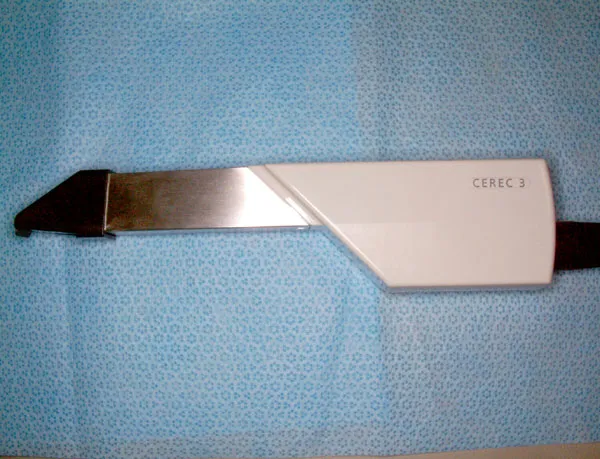
Photo: ADOEDO, Public domain, via Wikimedia Commons
Walk into a dental office in 2026 and you will encounter more screens than plaster. Intraoral scanners sit where impression trays once did, radiographs arrive with software annotations, and treatment plans are presented as moving three-dimensional models. Much of this is genuinely useful. Some of it is a vocabulary exercise.
The purpose of this audit is not to celebrate novelty or to resist it. It is to ask, for each category of technology a patient is likely to meet this year, three questions: does it change a clinical decision, is there evidence behind the claim, and can the patient verify what was promised?
How the Shortlist Was Judged
A technology earns 'ready' status here when it has displaced an older method for good reasons, when its limitations are well documented, and when a patient can reasonably expect a better outcome because of it. 'Promising' means the underlying idea is sound but the long-term record is still being written. 'Drawing board' means the demonstration is impressive and the clinical case is not yet made.
Ready Now: Intraoral Scanning
Digital impressions have largely won. For most crown, veneer, aligner, and night guard workflows, an intraoral scan is more comfortable than an elastomeric impression, particularly for patients with a strong gag reflex, and it produces a record that can be stored, shared, and re-examined later.
What it cannot do is compensate for poor scanning technique. Deep subgingival margins, limited opening, and heavy saliva all degrade the image, and the software will not always announce the compromise. Patients should feel comfortable asking whether the scan was reviewed for fit before the case leaves the office.
Ready Now: Printed Models, Guards, and Aligner Sockets
Three-dimensional printing has quietly become the workhorse of the modern laboratory. Models, surgical guides, occlusal splints, and aligner shells are routinely printed, and in many applications the accuracy exceeds what was achievable a decade ago.
Quality varies by printer, resin, and validation. A printed night guard is only as good as the material it is made from and the polishing it receives. This is a case where the appropriate question is not 'is it printed?' but 'which material, and how is it maintained?'
Ready, With Caveats: AI-Assisted Radiographic Reading
Software that flags caries, bone loss, and periapical changes on radiographs is now widely deployed, and several products carry clearance from the U.S. Food and Drug Administration for specific indications. Used as a second set of eyes, it can reduce misses and standardize review.
It is not a diagnosis. These systems vary in sensitivity and specificity, may overcall artifacts, and cannot weigh a patient's history, symptoms, or priorities. The clinician's interpretation remains the standard of care. A reasonable question is simply: what did the software flag, and what did you conclude from it?
Ready, With Caveats: Chairside Milling
Same-visit crowns are established practice for many single units, and for the right case the convenience is real. The trade-offs are material selection and characterization — a milled restoration may be excellent and still not match the artistry available from a laboratory technician working with layered ceramics on a case that demands it.
'Can this be done in one visit?' is a fair question. 'Should it be?' is the better one.
Ready, With Caveats: Printed Permanent Restorations
Ceramic-filled resins designed for definitive single-unit restorations have entered clinical use, and early results in selected indications are encouraging. The honest caveat is the length of the track record: lithium disilicate and zirconia carry decades of documentation, and printed permanent materials do not yet.
That does not make them inappropriate. It makes them a conversation about indication, wear, and expected service life rather than a straightforward upgrade.
Promising: Digital Shade Matching and Smile Simulation
Standardized photography, spectrophotometric shade devices, and simulation software have improved communication considerably. Patients can see a plausible version of an outcome before treatment begins.
Plausible is the operative word. A simulation is a planning instrument, not a warranty. Lighting in the software is idealized, tooth texture is simplified, and the way a restoration behaves in real light and against real lips is a matter of material and craft. Ask what the simulation assumes, and what happens if the final result differs.
Early Days: At-Home Monitoring
Smart toothbrushes, aligner compliance trackers, and apps that accept patient-submitted photographs are maturing. Their strength is engagement — a subtle nudge toward consistency. Their limitation is that behavior change from consumer devices tends to be modest and short-lived, and remote photographs cannot substitute for an examination of margins, occlusion, and tissue.
Patients should also ask where the data goes, who owns it, and whether it is sold or used for product development.
Still on the Drawing Board
Fully autonomous treatment planning, robotic restorative dentistry, and point-of-care salivary screening for systemic disease all appear regularly in press releases. Each is a genuine research direction. None is standard care in 2026, and presenting any of them as routine would be a distortion.
Translating the Marketing
- 'AI-powered' usually means image processing or pattern recognition, not independent clinical judgment.
- 'Same-day smile' often refers to temporaries or a limited number of units, not a full reconstruction.
- 'Painless laser treatment' describes an adjunct; it does not replace local anesthesia in every procedure.
- 'No-drill veneers' is a case-dependent technique, not a universal option.
Questions to Ask Before You Agree
- What decision does this technology change in my case?
- Is the device cleared by the FDA, and specifically for what indication?
- What is the evidence over five years, not five days?
- How does the cost compare with the conventional approach, and what does insurance cover?
- Who plans the case — software, a laboratory technician, or the clinician — and who signs off?
- What is the failure mode, and what does the warranty cover?
- Where is my scan and personal data stored, and can I obtain a copy?
- What is the plan if I decline the technology entirely?
Technology in dentistry is at its best when it disappears into the work — when the scan is simply a better record, the print simply a more accurate model, the software simply a clearer conversation. The judgment remains human, and it remains the part worth choosing a practice for.