Craft Over Convention: How Artistic Principles Elevate the Science of Smile Design

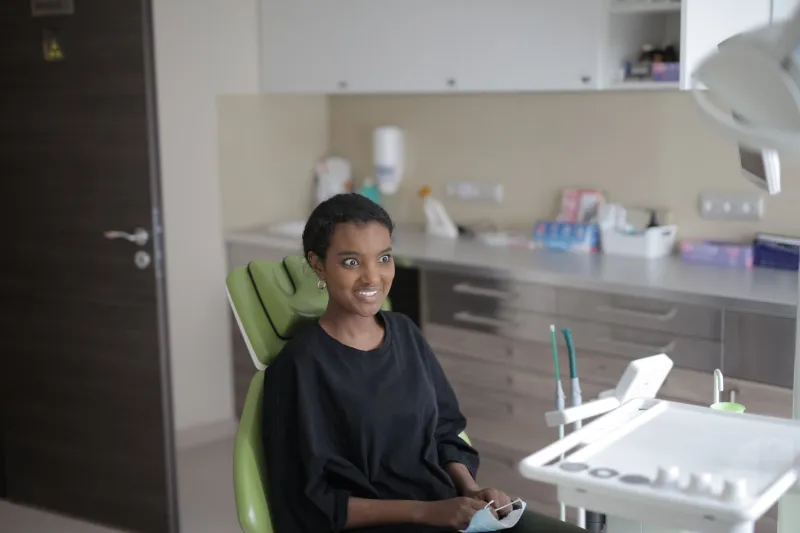
Photo: US Air Force from USA, Public domain, via Wikimedia Commons
There is a quality that separates the most compelling smiles from those that, while technically flawless, somehow feel slightly off—too uniform, too bright, too obviously the product of dental intervention. That quality is not measurable by any single clinical metric. It emerges, instead, from the same sensibility that distinguishes a masterfully composed painting from a technically accurate photograph: the deliberate, trained application of artistic judgment.
At its highest expression, cosmetic dentistry is not merely a clinical discipline. It is a design practice—one that requires its practitioners to think simultaneously as scientists, technicians, and visual artists.
The Limits of Technical Perfection
Conventional dental education trains clinicians to achieve outcomes that are correct: properly occluding teeth, structurally sound restorations, dimensions that fall within accepted clinical norms. These standards are essential. Without them, dentistry cannot be safe or durable.
But correctness, on its own, does not produce beauty. A smile can meet every technical benchmark and still appear artificial—because beauty is not a function of compliance with standards. It is a function of proportion, harmony, context, and the subtle interplay of visual elements that the human eye reads, often unconsciously, as either natural or contrived.
This is where the artist's eye becomes indispensable.
Proportion as a Design Language
Visual artists have long understood that proportion is the grammar of composition. The Renaissance masters studied it obsessively. Architects encode it into every façade. Graphic designers rely on it to guide the viewer's attention. And in cosmetic dentistry, proportion is equally foundational.
The concept most frequently referenced in smile design is the golden proportion—a ratio of approximately 1 to 1.618 that appears with remarkable frequency in structures perceived as aesthetically harmonious, from nautilus shells to classical architecture. When applied to dental composition, this principle informs the relative widths of the central incisors, lateral incisors, and canines as they recede from the viewer's perspective.
But proportion in smile design extends beyond individual tooth dimensions. It encompasses the relationship of the smile to the face itself: the width of the smile relative to the width of the face, the vertical display of tooth structure relative to lip position, the curvature of the incisal edges in relationship to the curvature of the lower lip. A dentist trained to see as a designer reads all of these relationships simultaneously—and calibrates each element of a restoration with that comprehensive visual context in mind.
Color Theory and the Nuance of Shade Selection
Few aspects of cosmetic dentistry are more consequential—or more frequently misunderstood—than shade selection. The popular conception of a beautiful smile often defaults to an image of brilliant white uniformity. In practice, however, teeth that are excessively white or perfectly monochromatic tend to read as artificial precisely because they deviate from the natural optical complexity of healthy dentition.
Natural teeth are not a single color. They exhibit a gradient: typically lighter at the incisal edge and warmer, more saturated at the cervical margin near the gum line. They have translucency—particularly at the incisal tip—that allows light to pass through and create a sense of depth. They reflect and absorb light differently depending on their surface texture, which in natural enamel is characterized by subtle horizontal ridges and surface variation.
A cosmetic dentist with a developed color sensibility understands that the goal is not maximum brightness. It is optical authenticity—a shade and surface character that reads as genuinely tooth-like within the unique color context of each patient's complexion, eye color, and hair tone. This is color theory applied to human anatomy, and it requires the same kind of perceptual training that artists develop through years of disciplined observation.
Negative Space and the Geometry of the Smile
In visual composition, negative space—the area surrounding the primary subject—is not empty. It is an active element that shapes how the viewer perceives the subject itself. Skilled designers manipulate negative space with as much intentionality as they apply to the positive elements of a composition.
In smile design, the equivalent of negative space is the buccal corridor: the dark region visible at the corners of the mouth between the posterior teeth and the inner surface of the cheeks when a patient smiles broadly. For decades, the prevailing clinical tendency was to minimize buccal corridors as much as possible, filling the smile frame from corner to corner with visible tooth structure.
Contemporary aesthetic thinking has complicated this assumption. A degree of buccal corridor, thoughtfully preserved, contributes to the dimensional naturalism of a smile—suggesting depth, suggesting that the dentition extends back into a three-dimensional oral cavity rather than presenting as a flat, theatrical veneer. The question is not whether to eliminate the buccal corridor, but how much negative space serves the individual patient's facial composition and smile character.
This is precisely the kind of judgment that cannot be derived from a formula. It requires an eye.
Symmetry, Asymmetry, and the Character of Authenticity
One of the most counterintuitive insights that emerges from the intersection of art and dentistry is that perfect symmetry is not, in fact, the aesthetic ideal. The human face is naturally asymmetrical. The two halves differ in subtle but consistent ways, and this asymmetry is part of what makes individual faces recognizable, interesting, and distinctly human.
A smile designed with rigid bilateral symmetry—each element on the left mirroring the right with mathematical precision—can read as uncanny rather than beautiful. It presents a version of the patient's face that is too regular, too composed, subtly at odds with the natural variation that characterizes their features.
The most successful cosmetic outcomes honor the patient's existing facial character, introducing symmetry where it serves the composition while preserving the slight, natural variations that make the result feel genuinely theirs. This requires the clinician to resist the temptation of the perfectly balanced blueprint and instead make design decisions in relationship to the actual, living face before them.
The Collaborative Canvas
Ultimately, what distinguishes a dentist who thinks like a designer is not simply knowledge of these principles—it is the capacity to apply them in genuine collaboration with the patient. Every face presents a unique compositional context. Every patient brings aesthetic preferences, cultural associations with beauty, and a personal relationship with their own smile that must be understood and honored.
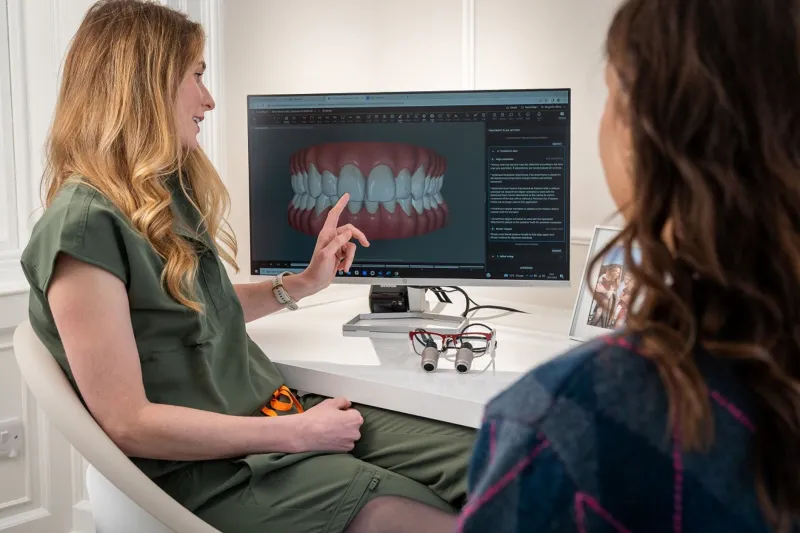
The design process, at its best, is a dialogue: the clinician contributing technical expertise and trained aesthetic judgment, the patient contributing self-knowledge and personal vision. The result, when this collaboration succeeds, is a smile that feels not like a cosmetic intervention, but like the truest possible expression of the person who wears it.
That is the aspiration that defines artisan dentistry—and the standard against which every outcome, however technically accomplished, must ultimately be measured.