Five Cosmetic Dentistry Myths That May Be Costing You Your Confidence
There is a particular kind of hesitation that keeps people from pursuing something they genuinely want. It is not indifference—it is uncertainty. When it comes to cosmetic dentistry, that uncertainty is often fueled by stories that circulated years ago, impressions formed from dramatic television makeovers, or concerns passed along by well-meaning friends who have never actually sat down with a skilled cosmetic dentist.
At Artisan Dental Studio, we encounter these concerns regularly, and we take them seriously. The decision to invest in your smile is a meaningful one, and it deserves honest, informed answers—not reassurances designed simply to move someone toward a treatment plan. What follows is a candid examination of the five myths we hear most often, and what the current science and artistry of cosmetic dentistry actually reveal.
Myth 1: Veneers Require Grinding Down Your Teeth
This is perhaps the most deeply held fear among patients considering porcelain veneers, and it is rooted in a reality that has largely been transformed by advances in materials and technique.
Traditional veneers did require the removal of a meaningful amount of enamel to accommodate the thickness of the porcelain shell. Contemporary veneers, however, are dramatically thinner—often no thicker than a contact lens—and require only minimal or, in some cases, no tooth reduction at all. These ultra-thin options, sometimes referred to as no-prep or minimal-prep veneers, preserve the vast majority of your natural enamel while still delivering the color correction, shape refinement, and surface improvement that patients seek.
The appropriate preparation level depends on the specific clinical situation—existing tooth position, bite relationship, and the degree of change desired all factor into the recommendation. What has changed is that aggressive enamel removal is no longer a foregone conclusion. A skilled cosmetic dentist will always seek the most conservative path to your goal.
Myth 2: Cosmetic Dentistry Produces Obvious, Unnatural Results
The image of blindingly white, uniformly square teeth has done considerable damage to the reputation of cosmetic dentistry—and understandably so. Overly uniform, excessively bright restorations do exist, and they are the product of a particular aesthetic philosophy that prioritizes dramatic visual impact over natural integration.
Modern cosmetic dentistry, practiced with genuine artistry, operates from an entirely different premise. Skilled clinicians study facial proportion, skin tone, lip shape, and the natural characteristics of existing dentition before recommending any alteration. The goal is not to replace your smile with a generic one but to refine and enhance the smile that is uniquely yours.
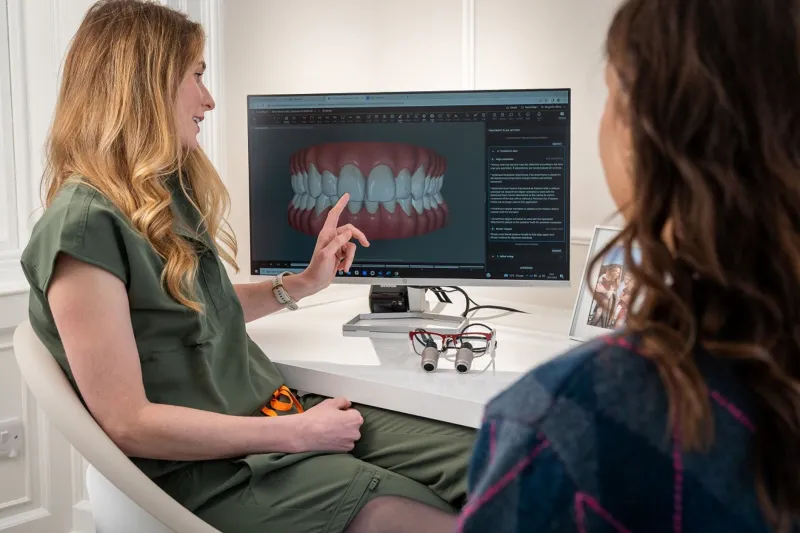
At Artisan Dental Studio, we routinely use digital smile design tools that allow patients to preview proposed changes before any treatment begins. Shade selection is guided by the natural translucency and undertones of your existing teeth. The result, when the process is executed thoughtfully, is a smile that prompts compliments about how well you look—not questions about what you had done.
Myth 3: Cosmetic Procedures Are Purely Elective and Offer No Health Benefits
The distinction between cosmetic and restorative dentistry is less absolute than many patients assume. A number of treatments that are categorized as cosmetic also deliver meaningful functional and health-related benefits.
Dental bonding used to close gaps between teeth reduces the spaces where bacteria accumulate, potentially improving periodontal health. Crowns placed to improve the appearance of a severely worn tooth simultaneously protect the remaining tooth structure from further breakdown. Orthodontic treatment—including clear aligner therapy—straightens teeth for aesthetic reasons but also corrects bite irregularities that can contribute to jaw pain, uneven wear, and difficulty cleaning effectively.
The line between looking better and functioning better is, in practice, quite permeable. Many patients who begin the conversation focused on appearance discover that their treatment plan also addresses concerns they had accepted as simply part of aging.
Myth 4: Cosmetic Dentistry Is Prohibitively Expensive
Cost is a legitimate consideration, and it would be dismissive to suggest otherwise. However, the assumption that cosmetic dental treatment is accessible only to a narrow segment of the population is increasingly inaccurate.
The range of cosmetic procedures spans a wide spectrum of investment. Professional whitening treatments represent a modest entry point with noticeable results. Composite bonding, which can correct chips, close minor gaps, and reshape teeth, is considerably less costly than porcelain veneers and can be completed in a single appointment. Even veneer treatment, when considered over its lifespan of ten to twenty years with proper care, represents a per-year investment that many patients find reasonable when placed in context.
Financing options have also expanded significantly. Many practices, including Artisan Dental Studio, work with third-party financing partners that allow patients to spread the cost of treatment over time, making comprehensive smile work accessible to a broader range of budgets. The first step is always a consultation—one that provides a clear, itemized picture of what treatment would involve and what it would cost, without obligation.
Myth 5: Once You Start, You're Locked In Forever
The fear of permanence is understandable. Committing to a change in your appearance feels weighty, and the concern that you might not love the result—or that your preferences might evolve—is entirely reasonable.
The reality is more nuanced. Some treatments, such as whitening and bonding, are reversible or easily modified. Others, such as veneers, do involve a degree of commitment, particularly if minimal enamel preparation is involved. But the permanence of modern cosmetic work is largely a function of its durability—these are materials and techniques designed to last, which is a feature, not a liability.
More importantly, the consultation and planning process at a quality cosmetic practice is designed specifically to address this concern. Previewing results digitally, discussing goals in depth, and proceeding through treatment in stages where appropriate all serve to ensure that patients arrive at a result they are confident in before any irreversible steps are taken.
The hesitation that surrounds cosmetic dentistry is not irrational—it is human. But it is also, in most cases, based on an incomplete picture of what modern treatment involves. If any of these myths have been standing between you and a smile you feel genuinely proud of, we would invite you to begin with a conversation. The artistry is in the details, and the details are worth exploring.