The Hands Behind the Smile: How Dentists and Ceramists Actually Build a Restoration Together
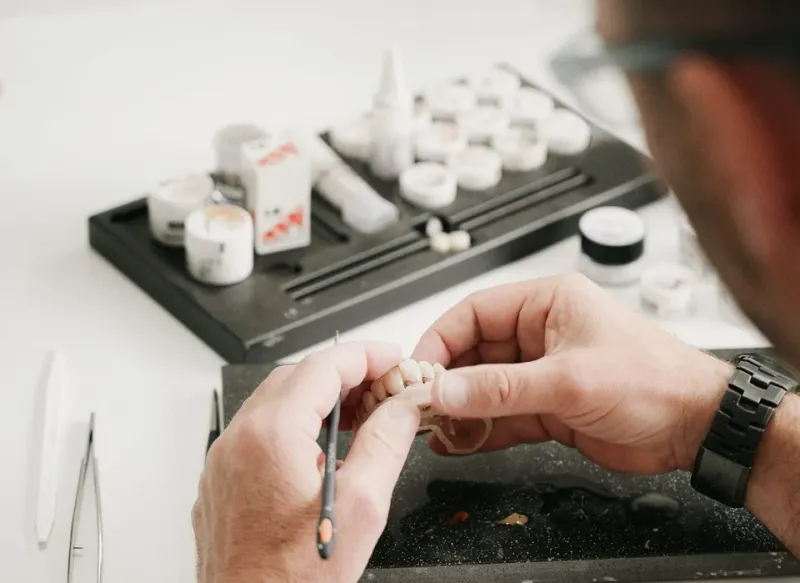
Photo: ACE DNTL STUDIO, CC BY-SA 4.0, via Wikimedia Commons
A patient sits in a treatment room and admires a finished veneer. It looks, to the untrained eye, like the work of one person. It is not. Behind that surface sit at least two sets of hands, several conversations, a photograph or a scan, and a set of instructions detailed enough that a stranger in another building can reproduce the character of a tooth that person has never seen.
The relationship between clinician and dental laboratory is one of the least discussed and most consequential partnerships in cosmetic dentistry. It determines whether a restoration fits at the margin to within microns, whether its color holds under fluorescent light, and whether the result looks like a tooth or like a very good imitation of one.
The Part of the Process Patients Never See
Most general practices work with a dental laboratory — sometimes a large commercial facility, sometimes a small studio with a handful of technicians, occasionally a single ceramist with a specialty in anterior aesthetics. The clinician prepares the teeth, records the bite and shade, and transmits a prescription. The technician interprets that prescription, builds the restoration in layers of porcelain or mills it from a block of ceramic, and returns it for seating.
Each transfer is a translation. And as with any translation, meaning can drift. A shade photographed under the wrong light, a margin recorded with insufficient resolution, an instruction reading “natural” without a definition of what natural means for this patient — these are the ordinary frictions of the craft, and they are resolved by communication rather than by talent alone.
Anatomy of a Working Relationship
In practices that invest in aesthetic outcomes, the dentist and ceramist tend to operate less like vendor and buyer and more like colleagues with a shared case file. That relationship often includes:
- A shared visual language. Photographs taken with a calibrated shade tab, polarized and non-polarized images, and a written description of surface texture, translucency, and incisal character.
- A conversation before fabrication. For complex anterior cases, a call or a joint review of the digital model is common. It is cheaper to discuss a contour than to remake a crown.
- A try-in stage. Where the case allows, provisionals or a trial placement let the patient test what has been designed before the final ceramics are glazed.
- A feedback loop. Skilled clinicians photograph their seated cases and send the images back. Laboratories that receive this feedback compound their accuracy over time; those that do not tend to repeat the same small errors.
None of this is glamorous. It is the unglamorous infrastructure on which a beautiful result rests.
Where Digital Tools Help — and Where Judgment Remains Human
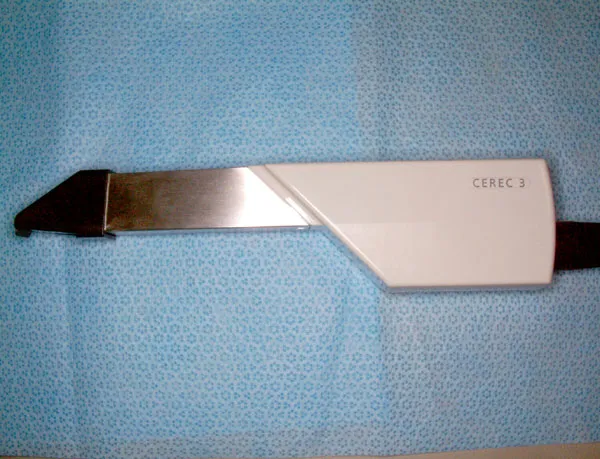
Intraoral scanning has made the physical impression largely obsolete in many practices, and the change is not merely one of convenience. A digital file can be sent in minutes, reviewed by a technician at a distant bench, and adjusted without shipping silicone across the country. Design software allows the clinician and the ceramist to examine contour, embrasure form, and occlusal contact on the same screen.
What the software does not do is decide. A milling unit can produce a restoration of impeccable geometry that looks lifeless because no one chose the right translucency gradient. A scan can capture a preparation with extraordinary fidelity and still fail to record that the patient's lip line exposes the gingival margin when she laughs.
The most effective laboratories in 2026 tend to treat digital workflows as a communication channel rather than a manufacturing shortcut: better data in, better questions asked, and a human decision at the end of the chain.
Reading a Prescription: Materials and What They Signal
Patients are not expected to evaluate a laboratory prescription, but they can ask what material is being used and why. The answer is often instructive.
- Lithium disilicate is widely chosen for anterior veneers and single crowns where translucency and bonding strength matter.
- Zirconia has become the workhorse for posterior restorations and, in its higher-translucency formulations, for selected anterior work where strength is a priority.
- Feldspathic porcelain remains the domain of ceramists who layer by hand, prized for the way it mimics natural enamel and often reserved for cases where the front teeth are the entire point.
A clinician should be able to explain the trade-offs in plain terms: durability against aesthetics, conservative preparation against coverage. If the answer is only a brand name, ask a second question.
Why Character Is the Hardest Thing to Delegate
Symmetry is easy to specify. Character is not. The subtle incisal halo, the faint chalkiness near the cervical third, the tiny irregularity that keeps a smile from looking machined — these are choices, and they require someone to make them on behalf of a face they may know only through photographs.
This is where the dentist's role as translator becomes most important. A prescription that says “match adjacent teeth” tells a technician almost nothing. One that describes the adjacent centrals as slightly warmer at the cervical margin with a soft, low-contrast incisal edge gives the ceramist something to build toward. The best clinicians we work alongside describe teeth the way a portrait painter describes skin.
Questions That Reveal Craftsmanship
Patients evaluating a practice — or a proposed treatment plan — can ask:
- Which laboratory will fabricate these restorations, and have you worked with them for long?
- Will you send photographs and a shade map, or only a scan?
- Will I have a try-in before the final ceramics are bonded?
- If the color or shape is off, what is the remake policy, and who bears the cost?
- Can I see photographs of similar cases this clinician and this laboratory completed together?
A confident answer to the fifth question is more informative than any brochure.
The Team, Not the Signature
Cosmetic dentistry has a habit of celebrating individual clinicians, and skill at the chair certainly matters. But the restoration a patient wears home is a collaboration — clinician, ceramist, assistant, sometimes a specialist who shaped the gums before anyone touched a tooth. Understanding that chain is not a way to diminish your dentist. It is a way to ask better questions about the hands your smile will pass through before it reaches your face.