Filtered to a Fault: When Digital Beauty Standards Collide With the Dentist's Chair
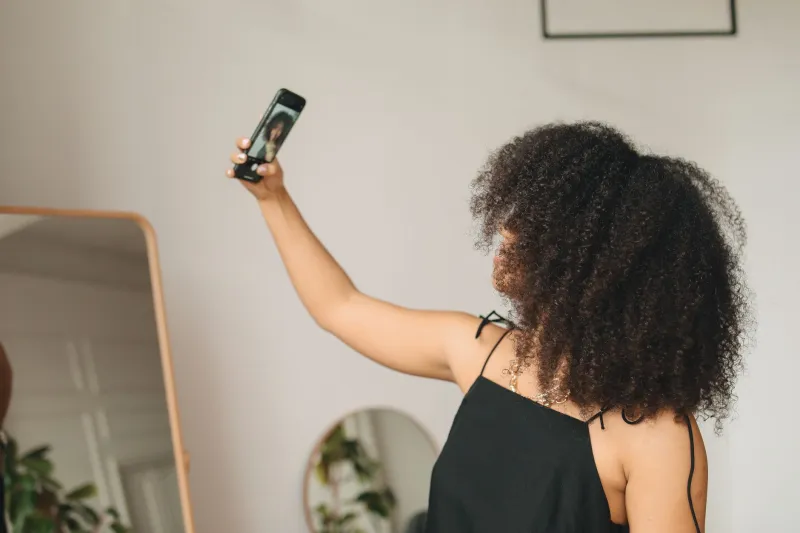
There is a particular moment that dental professionals across the country have come to recognize. A patient settles into the consultation chair, reaches for their phone, and presents a photograph — sometimes a selfie, sometimes a screenshot from social media — as the visual blueprint for their ideal smile. The image is luminous, symmetrical, and strikingly flawless. It is also, in most cases, the product of software rather than biology.
This is the smile paradox of the digital age: the more sophisticated our image-editing tools become, the wider the chasm grows between how people perceive their own faces and what genuinely beautiful, achievable dentistry can deliver.
The Architecture of a Filtered Face
Popular photo applications and social media platforms now offer users real-time filters capable of smoothing skin texture, enlarging eyes, slimming facial contours, and — most relevant to dental professionals — brightening and reshaping teeth with a single swipe. These are not subtle enhancements. Many filters algorithmically restructure the proportional relationships between facial features in ways that would be anatomically impossible to replicate in a clinical setting.
The human face is governed by a complex geometry. The width of a smile, the length of individual teeth, the relationship between the gum line and the upper lip — each element exists within a system of proportions that has evolved over millennia and varies meaningfully from person to person. When a filter compresses a jaw, it simultaneously alters the apparent width of the dental arch. When it brightens teeth beyond a natural shade range, it shifts the visual balance of the entire face. The result is an image that feels aspirational precisely because it is disconnected from anatomical reality.
For patients who spend significant time engaging with filtered content — both their own and others' — these digitally altered standards can quietly recalibrate their sense of what is normal, achievable, or even desirable.
What Patients Bring to the Consultation
The phenomenon has tangible clinical consequences. Cosmetic dental consultations increasingly involve what practitioners describe as "reference photo conversations" — discussions in which a patient's stated goals are shaped entirely by imagery that has been digitally manipulated. Requests may include tooth proportions that would compromise structural integrity, shade levels that exceed what looks natural against a given skin tone, or symmetry corrections that fail to account for the asymmetries inherent in every human face.
None of this reflects poor judgment on the patient's part. It reflects the environment in which most Americans now form their aesthetic self-image. When filtered photographs dominate a person's visual landscape — on Instagram, TikTok, and beyond — those images become the reference point against which real-life reflections are measured. The unfiltered mirror, by contrast, can begin to feel like the aberration.
The emotional dimension of this dynamic deserves careful attention. Patients who arrive with filtered images as their benchmark are not simply requesting a cosmetic procedure. They are, in many cases, expressing a deeply felt desire to feel as confident in daily life as they do in a carefully edited photograph. That desire is entirely legitimate. The question a skilled dental team must answer is how to honor it authentically.
The Science of Proportion as a Creative Compass
At Artisan Dental Studio, every smile design begins not with a filter, but with the face. Facial proportion analysis — rooted in principles that span classical art, modern photography, and dental biomechanics — allows clinicians to evaluate how a patient's teeth, gums, lips, and surrounding structures interact as an integrated whole.
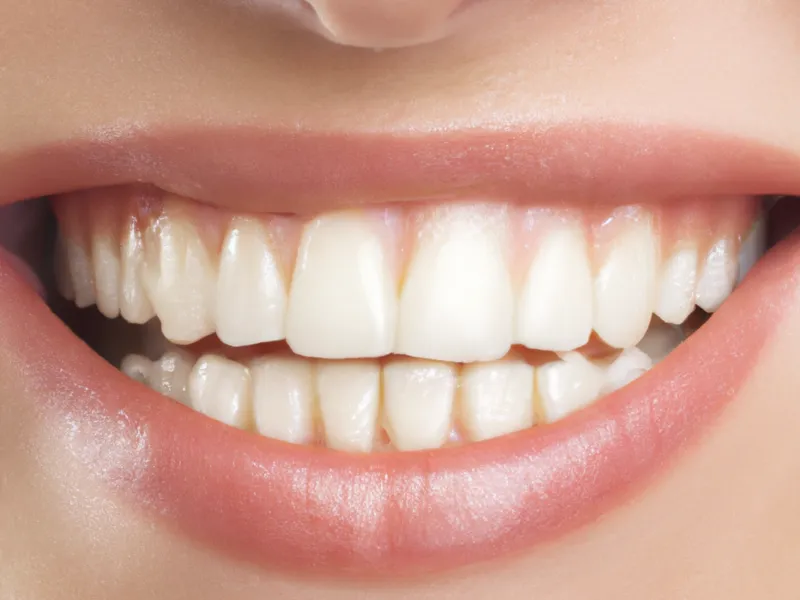
This process draws on measurable relationships: the width-to-length ratio of the central incisors, the curvature of the incisal edge relative to the lower lip, the zenith points of the gum line, and the degree to which the smile arc follows the natural contour of facial movement. These are not arbitrary aesthetic preferences. They are the structural underpinnings of a smile that looks genuinely beautiful in motion, in conversation, and in natural light — not merely in a static, front-facing photograph.
When a patient presents a filtered image as a goal, the consultation becomes an opportunity for translation rather than rejection. The underlying desire — whiter teeth, greater symmetry, a more confident smile — is almost always achievable through clinical artistry. What changes is the pathway. A skilled cosmetic dentist can often deliver results that exceed what a patient imagined possible, precisely because those results are calibrated to the individual's actual facial architecture rather than imposed upon it.
Bridging the Gap Between the Screen and the Mirror
One of the most meaningful services a cosmetic dental practice can offer in the current environment is what might be called aesthetic literacy — helping patients develop a more nuanced understanding of what they are seeing when they look at filtered images, and what genuinely exceptional dentistry can achieve.
Digital smile design tools play a valuable role here. Unlike social media filters, professional visualization software used in dental planning operates within realistic anatomical parameters. Patients can preview proposed changes on their own unaltered photographs, seeing how adjusted tooth proportions, corrected alignment, or refined shading would appear on their actual face. This process tends to be revelatory. Many patients discover that the natural, proportionate result is more appealing — and more confidence-inspiring — than the filtered version they initially brought in.
The distinction matters because confidence rooted in authenticity endures in a way that confidence rooted in digital illusion does not. A smile that looks extraordinary in a selfie but feels somehow misaligned in the bathroom mirror offers a diminished return. A smile designed with precision around a patient's genuine facial features, by contrast, becomes a source of consistent, daily assurance.
The Artisan Standard
The name Artisan Dental Studio reflects a deliberate philosophy: that exceptional dentistry requires the integration of scientific rigor and genuine aesthetic sensibility. An artisan does not impose a template. An artisan studies the material — in this case, the unique canvas of each patient's face — and works with its inherent character to produce something that is both technically sound and visually compelling.
In an age of filters and algorithmic beauty, that commitment to individuality is not merely a differentiating feature. It is a clinical and ethical imperative. Patients deserve to understand the difference between what a filter applies to a photograph and what a skilled practitioner can achieve in real life. More importantly, they deserve to discover that the real-life version — grounded in proportion, crafted with care, and designed specifically for them — can be more beautiful than anything a digital tool could generate.
The goal of a smile transformation was never to match an image on a screen. It was always to help a person feel fully at ease with the face they present to the world.