When Clear Aligners Stop Working: Unraveling the Mystery Behind a Stalled Smile
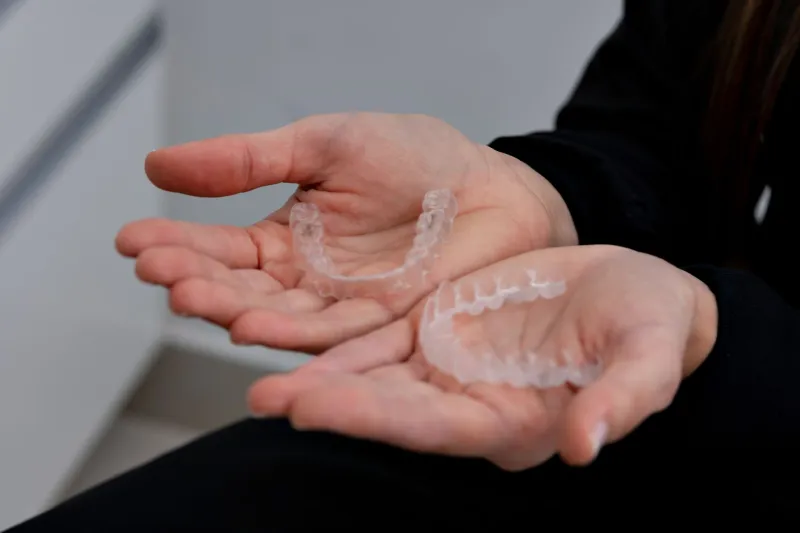
There is a particular kind of disappointment that settles in when a patient compares their current aligner tray to the projected outcome and realizes the two no longer match. The teeth are not where they should be. The trays feel loose too quickly—or not loose enough. Progress, once steady and encouraging, has quietly stalled.
This phenomenon is far more common than most clear aligner providers acknowledge openly. Patients are frequently told that treatment is "on track" when careful clinical observation would suggest otherwise. At Artisan Dental Studio, we believe that honesty about the complexities of tooth movement is not a liability—it is the foundation of genuinely patient-centered care. Understanding why aligners sometimes stop delivering results is essential knowledge for anyone currently in treatment or considering it.
The Biology Behind Tooth Movement
Teeth do not move simply because a plastic tray applies pressure. The process is fundamentally biological. When controlled force is placed against a tooth, the periodontal ligament—the connective tissue anchoring each tooth to its surrounding bone—responds by triggering a cascade of cellular activity. Bone is gradually resorbed on the pressure side and deposited on the tension side, allowing the tooth to migrate through the jaw.
This process has limits. It demands adequate blood supply, healthy bone density, and a periodontal environment free from significant inflammation. When any of these conditions are compromised, tooth movement slows or ceases entirely. Unmanaged gum disease, for instance, can undermine the very tissue architecture that makes orthodontic movement possible. Similarly, patients with lower bone density—whether due to age, medications, or systemic conditions—may find that their teeth respond more sluggishly than the aligner software predicted.
Clear aligner algorithms are sophisticated, but they are built on population averages. Individual biology does not always conform to averages.
The Compliance Variable: More Nuanced Than You Think
The standard instruction is well-known: wear your aligners for twenty to twenty-two hours per day. Yet compliance is rarely as binary as providers sometimes present it. A patient who wears aligners for nineteen hours daily may not experience dramatic setbacks, while another who removes them for extended periods during meals, social events, or professional obligations may find that their treatment drifts off course gradually and almost imperceptibly.
There is also the matter of insertion consistency. An aligner that is not seated fully against every tooth—particularly toward the back of the arch—cannot apply the precise forces the treatment plan requires. Many patients believe their trays are fully engaged when, in fact, small gaps between the tray and the tooth surface are undermining the intended movement. Chewies, the small foam cylinders often provided by orthodontists, exist specifically to address this issue, yet their use is frequently inconsistent.
At Artisan Dental Studio, we evaluate compliance not as a judgment of character but as a clinical variable requiring honest discussion. When a patient's progress has stalled, understanding their real-world experience with the trays is among the first conversations we initiate.
Attachments, Tracking, and the Technical Architecture of Treatment
Modern clear aligner systems rely heavily on tooth-colored composite attachments—small shaped bumps bonded to specific teeth—to give the trays mechanical purchase over movements that flat plastic alone cannot accomplish. Rotations, vertical shifts, and root torque all depend on these attachments being precisely placed and fully intact.
When an attachment debonds, which occurs with some regularity due to the mechanical stresses of daily life, the entire movement sequence for that tooth may be compromised. Treatment can fall out of "tracking," a term describing the alignment between where the teeth actually are and where the software predicted they would be at a given stage.
Once tracking is lost, continuing to progress through subsequent trays does not resolve the discrepancy—it compounds it. This is one of the most significant technical pitfalls in clear aligner treatment, and it is one that requires clinical expertise rather than digital projection to identify. Three-dimensional software can plan with remarkable precision; it cannot examine the mouth in front of it.
Refinements: The Clinical Tool That Often Goes Underutilized
When teeth deviate from their planned trajectory, the appropriate response is a refinement—a mid-course correction in which new impressions or digital scans are taken, and a revised series of aligners is fabricated to account for the actual position of the teeth rather than the projected one.
Refinements are not a sign of treatment failure. They are a recognized and often necessary component of comprehensive aligner therapy. The challenge is that not every provider monitors progress with the rigor required to identify the need for refinements early. Patients who are not seen frequently or who are not evaluated with careful clinical attention may continue advancing through trays long after their treatment has quietly departed from its intended course.
At Artisan Dental Studio, monitoring is not a passive activity. We assess attachment integrity, tray seating, and actual tooth position at every check-in—not merely comparing the current tray to the projected digital outcome, but examining the patient in front of us with the same attentiveness we bring to every aspect of our work.
When the Problem Runs Deeper
Occasionally, a stalled clear aligner case reveals an underlying issue that the initial treatment plan did not adequately account for. Certain tooth movements—particularly significant root torque, severe rotations, or cases involving teeth that have previously been treated with root canals—may simply exceed the mechanical capabilities of aligner therapy alone.
In these situations, the artisan approach involves honest reassessment rather than persistence for its own sake. Supplemental interproximal reduction, strategic use of auxiliaries, or a hybrid approach incorporating brief fixed appliance therapy may be necessary to achieve the outcome the patient originally envisioned. Recommending such adjustments requires both clinical knowledge and the willingness to prioritize the patient's result over the simplicity of the original plan.
Reclaiming Your Treatment
A stalled smile is not a permanent condition. In the majority of cases, careful diagnostic evaluation—one that considers biology, technical execution, and patient experience in equal measure—can identify the specific factors responsible and chart a clear path forward.
The key is not to continue advancing through trays in the hope that the teeth will eventually catch up. That approach rarely resolves the underlying issue and frequently makes it more complex to address. The appropriate response is to pause, assess, and recalibrate with the same precision that should have guided the treatment from the outset.
At Artisan Dental Studio, we approach every stalled case as a diagnostic puzzle deserving genuine clinical attention. Your smile transformation is too important—and too personal—to be managed by software alone. It requires the discerning eye, the informed judgment, and the patient-centered commitment that define artisan dentistry at its finest.
If your clear aligner treatment feels as though it has reached an inexplicable wall, we invite you to schedule a comprehensive evaluation. A second opinion, delivered with honesty and expertise, may be precisely what your smile needs to move forward.