Time Leaves Its Mark: Understanding How Your Smile Ages and What Artisan Dentistry Can Do to Restore It
There is a quiet paradox at the heart of dental health: you can brush twice daily, floss religiously, and visit your dentist without fail—and your smile will still change in ways that feel almost unfair. Not because you have failed in your habits, but because your teeth are living structures embedded within a body that is always in motion, always adapting, always subject to the slow and relentless forces of time.
At Artisan Dental Studio, we consider it part of our responsibility not only to treat dental concerns as they arise, but to help patients understand the deeper story their smile is telling. That story is biological, structural, and—when read carefully—remarkably actionable.
The Biology Beneath the Surface
Teeth are not static objects. Enamel, the outermost layer, is the hardest substance the human body produces—but it does not regenerate. Every meal, every sip of coffee, every grinding episode during a stressful workweek removes microscopic amounts of this irreplaceable material. By the time most patients reach their forties, cumulative enamel loss has already begun to alter both the color and the contour of their teeth in ways that no amount of whitening toothpaste can fully address.
Beneath the enamel lies dentin, a slightly yellower tissue that becomes proportionally more visible as the outer layer thins. This is why teeth that once appeared brilliantly white in youth take on warmer, more muted tones with age—even in the absence of staining from food or beverages. The change is structural, not cosmetic in the superficial sense, and it requires a structural solution.
The pulp chamber—the innermost living core of each tooth—also shrinks over time as secondary dentin is deposited along its walls. This natural calcification process reduces the tooth's sensitivity but also diminishes its vitality in ways that can affect how it responds to restorative procedures. A tooth treated at fifty behaves differently under clinical conditions than the same tooth would have at thirty, and experienced clinicians account for this distinction in every treatment plan.
The Shape-Shifting Smile
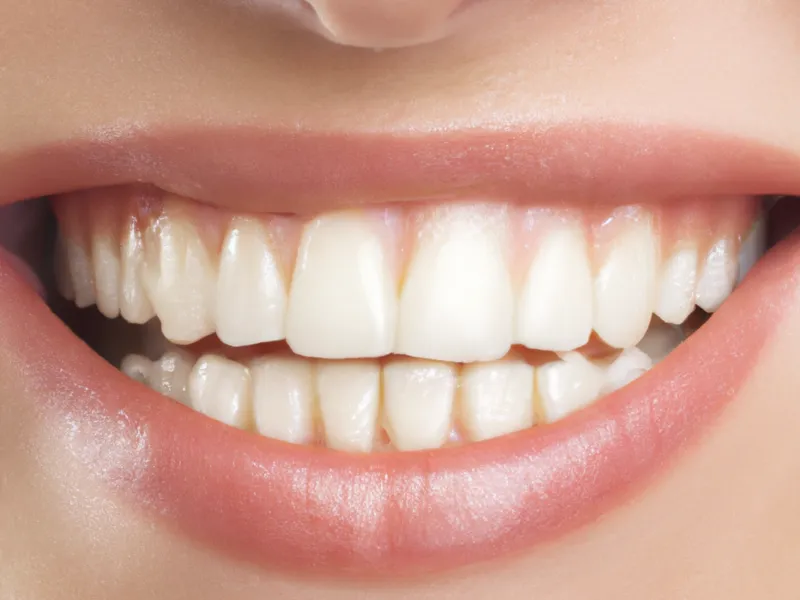
Perhaps the most visually striking aspect of dental aging is the change in tooth shape. Young teeth are characterized by defined incisal edges—the biting surfaces of the front teeth—that often display subtle ridges called mamelons, remnants of the developmental lobes that formed the tooth during adolescence. These details contribute to a youthful, dimensional appearance that catches light in a particular way.
Over years of normal use, those edges wear flat. The upper front teeth, in particular, tend to shorten measurably, sometimes by a millimeter or more over the course of a decade. This shortening is not merely a cosmetic concern. As the upper teeth lose length, the lower teeth—which continue to erupt slowly in a biological process called passive eruption—can begin to crowd and shift. The overall arc of the smile narrows, and the teeth that once filled a natural, graceful curve may begin to appear crowded or irregular.
This interplay between wear and eruption creates what dental professionals refer to as a collapsed bite—a condition in which the vertical dimension of the face subtly decreases, contributing to changes in facial appearance that patients often attribute incorrectly to skin aging alone. The deepening of lines around the mouth, the slight forward projection of the lower jaw, the loss of lip support: these are frequently dental stories wearing the costume of dermatological ones.
Color, Texture, and the Optical Qualities of an Aging Tooth
Beyond shape, the optical properties of teeth change considerably with age. Young enamel has a translucency that gives teeth a luminous, almost three-dimensional quality—light passes through the enamel and reflects back differently depending on the angle and the underlying dentin shade. As enamel thins and becomes more uniform in its opacity, this depth is lost. Teeth begin to look flatter, more monochromatic.
Surface texture also changes. The micro-texture of young enamel—the fine horizontal ridges that scatter light across the tooth's surface—gradually smooths with wear and repeated polishing. A smooth surface reflects light more uniformly, which paradoxically makes teeth appear less vibrant despite being technically cleaner. This is one reason why professional cosmetic restorations are carefully textured by hand: the artistry is in the detail, and the detail is in the light.
What Contemporary Dentistry Can Accomplish
The encouraging reality is that modern restorative and cosmetic dentistry has developed remarkably refined responses to each of these biological processes. The key lies in understanding that effective treatment must address the underlying structural cause, not merely the aesthetic symptom.
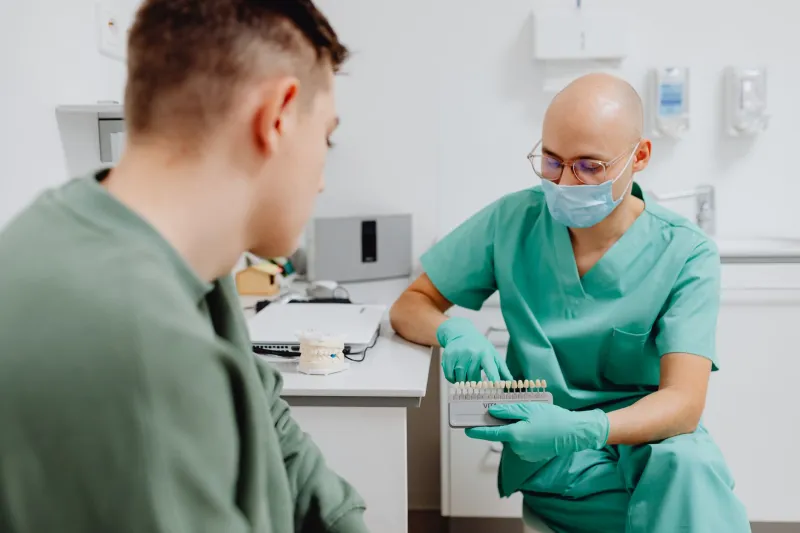
Porcelain veneers and ceramic restorations remain among the most powerful tools for reversing the visible effects of enamel loss and tooth shortening. When crafted by a skilled ceramist working from detailed photographs, digital smile designs, and precise shade mapping, these restorations can replicate the translucency, texture, and dimensional quality of youthful enamel with extraordinary fidelity. The goal is not to create a uniform, artificial brightness, but to restore the natural optical complexity that aging has diminished.
Bite reconstruction—sometimes called full-mouth rehabilitation—addresses the structural consequences of long-term wear. By carefully restoring the vertical dimension of the bite and re-establishing proper tooth proportions, this approach can reverse the facial changes associated with a collapsed bite, improving both function and appearance simultaneously.
Composite bonding, when applied with artistic precision, offers a more conservative option for patients in earlier stages of wear. Modern composite materials have improved dramatically in their ability to mimic enamel characteristics, and in the hands of a clinician with a trained aesthetic eye, bonding can restore incisal edges, correct minor shape irregularities, and add years of apparent youth to a smile without irreversible alteration of tooth structure.
Tooth position and alignment can be addressed through clear aligner therapy even in patients well into their fifties and sixties. Correcting the drift and crowding that accompany passive eruption not only improves aesthetics but also creates a more stable foundation for any restorative work that follows.
Planning for the Long Arc
At Artisan Dental Studio, we approach smile design not as a single event but as an ongoing relationship with a patient's biology. The restorations we place today are designed with an awareness of how the smile will continue to evolve—built to accommodate natural movement, matched to a shade that will remain harmonious as surrounding teeth age, and structured to support the facial contours that define each patient's unique appearance.
Aging is not a dental failure. It is a biological reality that, when understood clearly and addressed thoughtfully, becomes an opportunity for the kind of precise, personalized care that defines artisan dentistry at its best. The smile you have at sixty need not simply be a diminished version of the one you had at thirty. With the right clinical partnership, it can be something more considered, more refined—a portrait of who you are now, rendered with all the craft that modern dentistry can bring to bear.