When the Mirror Changes But the Mind Doesn't: Understanding Why Smile Transformations Sometimes Fall Short of Emotional Fulfillment

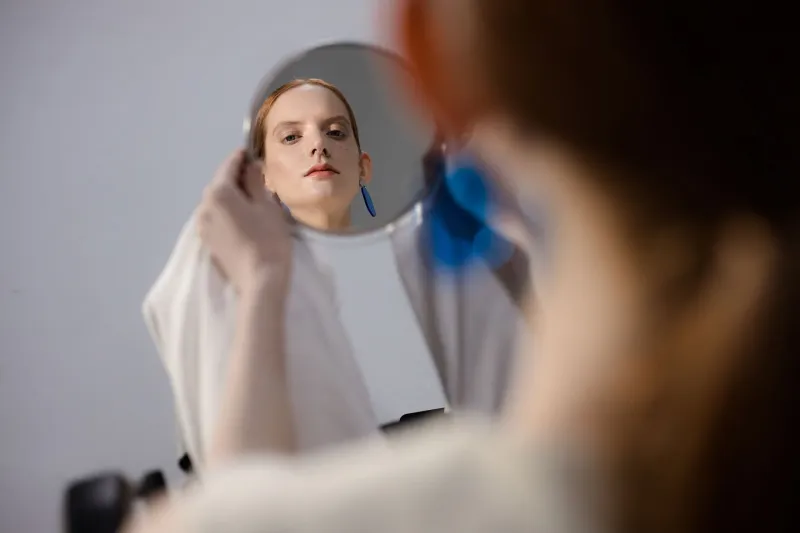
Photo: woman thoughtfully looking at reflection in mirror with peaceful expression, via img.freepik.com
There is a quiet moment that many cosmetic dentistry patients describe but rarely discuss openly. The veneers are placed. The final photographs are taken. The dentist holds up the mirror, and the reflection is, by every objective measure, stunning. Yet somewhere between that polished surface and the patient's inner sense of self, something does not quite connect. The anticipated wave of confidence fails to arrive. Instead, a strange unease settles in—a feeling of wearing someone else's expression.
This experience is more common than the before-and-after photographs on social media would suggest, and it deserves a thoughtful, honest conversation.
The Neuroscience of a New Face
The human brain is, among its many remarkable qualities, a relentless pattern-recognition machine. For years—sometimes decades—it has catalogued a specific version of your smile: the slight asymmetry, the familiar shade, the particular way your lips frame your teeth when you laugh. This internal image is not merely visual. It is woven into your sense of identity.
When a cosmetic transformation occurs, the external reality updates almost immediately. The psychological reality, however, operates on a far slower timeline. Neuroscientists refer to this as perceptual adaptation—the brain's gradual recalibration to a new sensory baseline. In practical terms, it means that even a genuinely beautiful outcome can feel foreign, almost intrusive, during the early weeks following treatment.
Research in body image psychology further illuminates this phenomenon. Studies have consistently demonstrated that self-perception narratives—the stories we tell ourselves about how we look—are surprisingly resistant to external change. A patient who spent twenty years believing her smile was her most significant insecurity does not automatically shed that belief the moment her porcelain veneers are bonded into place. The belief system lags behind the physical reality, sometimes by months.
Impostor Syndrome at the Dental Chair
In professional culture, impostor syndrome describes the unsettling conviction that one's achievements are undeserved or fraudulent, despite clear evidence to the contrary. A parallel phenomenon can emerge following cosmetic dentistry. Patients occasionally report feeling as though their new smile is performative—a beautiful mask rather than an authentic expression of who they are.
This response is not a sign of ingratitude or psychological fragility. It is, in fact, a predictable consequence of rapid external change without corresponding internal preparation. When the gap between how we look and how we feel about how we look becomes too wide, the psyche registers a form of dissonance that no amount of professional craftsmanship can resolve on its own.
The question worth asking is not whether this paradox exists, but what conditions make it more or less likely to occur—and what a truly patient-centered practice can do to address it.
Where Artisan Dentistry Diverges From Conventional Cosmetic Care
A significant portion of cosmetic dental disappointment can be traced back to a process that prioritizes the technical outcome over the patient's emotional landscape. When treatment planning begins and ends with shade selection and digital imaging, the human being behind the smile is, in a meaningful sense, left out of the conversation.
At Artisan Dental Studio, the philosophy is grounded in the understanding that a smile transformation is not a product to be delivered—it is a collaboration to be developed. This distinction has practical consequences at every stage of care.
During initial consultations, the conversation extends well beyond clinical measurements. Patients are encouraged to articulate not only what they want to see in the mirror, but what they want to feel when they encounter that reflection. What does confidence look like in the context of their specific life? What associations do they carry about their smile's history? These questions are not peripheral to the treatment process; they are central to it.
The Role of Graduated Transformation
One of the most underappreciated tools in managing the psychological dimension of cosmetic dentistry is pacing. When changes are introduced incrementally—when patients have the opportunity to adjust to each stage before proceeding to the next—the brain's adaptation process is given the time it requires.
Dental wax-ups, trial smiles, and provisional restorations serve purposes that extend far beyond technical verification. They allow patients to inhabit a version of their new smile before it becomes permanent. They create a rehearsal period during which the internal narrative can begin to shift. Patients who spend two to four weeks wearing a provisional restoration frequently report that, by the time the final restorations are placed, the new smile already feels like their own.
This is not a luxury accommodation. It is, from a psychological standpoint, a clinical necessity for patients who carry significant emotional weight around their dental history.
Recalibrating Expectations Without Diminishing Hope
None of this is an argument against pursuing cosmetic dentistry or tempering one's aspirations. The transformations that skilled restorative and cosmetic dentistry can achieve are, in the most genuine sense, life-altering for many patients. The goal is not to lower expectations but to expand them—to include the emotional journey alongside the aesthetic destination.
Patients who enter the process understanding that confidence is built, not installed, are far better equipped to navigate the adaptation period with patience rather than alarm. When the strange feeling of unfamiliarity arises in those early weeks, they recognize it as a normal phase of integration rather than evidence that something has gone wrong.
For some patients, the internal work genuinely benefits from professional support beyond the dental chair. Therapists who specialize in body image and identity transition can be invaluable partners in a comprehensive smile transformation. A practice that acknowledges this reality—and is willing to say so—demonstrates a level of care that transcends the technical.
The Measure of True Satisfaction
In the end, the most meaningful metric of a successful smile transformation is not the shade of the porcelain or the precision of the gingival contour, as essential as those elements are. It is the moment—often quiet, often unremarkable in its setting—when a patient smiles without thinking about smiling. When the new reflection stops registering as new and simply registers as theirs.
That moment cannot be rushed. It cannot be manufactured through marketing language or manufactured through clinical shortcuts. It emerges from the convergence of exceptional craftsmanship and genuine human attentiveness—the precise intersection where artisan dentistry, at its finest, chooses to stand.
If you have undergone a smile transformation and find yourself navigating this unexpected emotional terrain, know that your experience is valid, recognized, and addressable. The gap between looking better and feeling better is real. And with the right partnership, it is entirely closeable.