When Your Smile Lags Behind Your Life: Understanding Dental Aging and How to Close the Gap
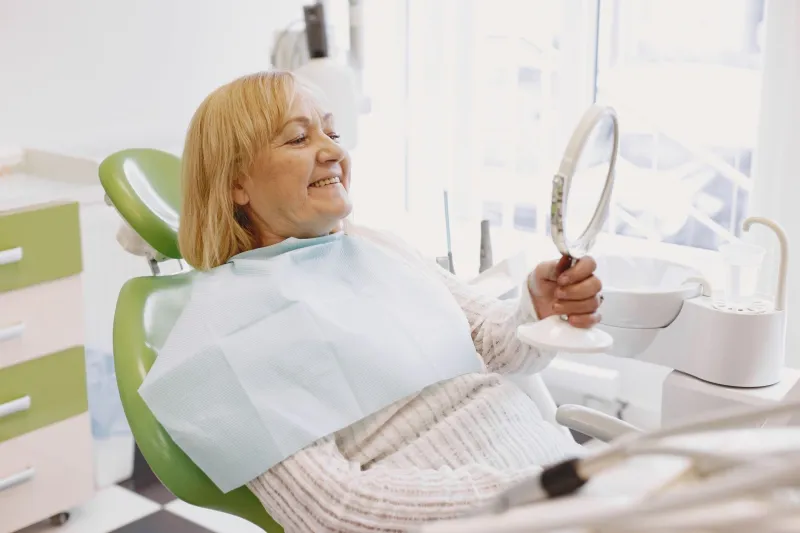
There is a particular kind of frustration that comes from looking in the mirror and feeling a disconnect — not with your face, exactly, but with your teeth. The skin holds its tone. The eyes still carry energy. Yet the smile seems to belong to someone older, someone more worn down by time. This experience is more common than most people realize, and it is not a matter of neglect or vanity. It is biology.
Teeth age differently than the rest of the face, and they do so according to mechanisms that are largely invisible until the cumulative effects become impossible to ignore. For patients who invest in their overall health and appearance, this mismatch can feel particularly jarring. The good news is that it is also one of the most addressable disparities in modern cosmetic and restorative dentistry.
The Biology Behind the Mismatch
Facial skin, while certainly subject to the effects of time, benefits from ongoing cellular regeneration. The epidermis renews itself continuously, and with appropriate care — hydration, sun protection, thoughtful nutrition — many people maintain a reasonably youthful appearance well into their fifties, sixties, and beyond.
Teeth do not enjoy this same capacity for self-renewal. Enamel, the hard outer layer that gives teeth their brightness and structural integrity, is not a living tissue in the regenerative sense. Once it wears away, it does not grow back. Every bite, every acidic beverage, every grinding episode quietly diminishes a resource that cannot be replenished through the body's natural processes alone.
Beneath the enamel lies dentin, a slightly yellower layer that becomes progressively more visible as enamel thins. This is one of the primary reasons teeth darken with age — not because of surface staining alone, but because the underlying structure is literally showing through. Meanwhile, the pulp chamber at the center of each tooth gradually fills with secondary dentin over time, further shifting the tooth's optical properties toward a more opaque, darker appearance.
Gum tissue presents its own aging trajectory. Recession — the gradual pulling back of the gingival margin — exposes the root surfaces of teeth, which are naturally darker and more porous than enamel-covered crowns. Even modest recession can significantly alter the visual balance of a smile, making teeth appear elongated and the gumline uneven.
Why Wear Accumulates Faster Than You Expect
Beyond the purely biological, lifestyle factors accelerate dental aging in ways that are easy to underestimate. The American diet is notably acidic — citrus fruits, carbonated beverages, coffee, and wine all contribute to enamel erosion over time. Bruxism, or chronic teeth grinding, is widespread among adults navigating the pressures of modern life, and it silently flattens the biting edges of front teeth in ways that subtly but unmistakably age the smile.
The edges of the upper front teeth are particularly telling. In a youthful smile, these edges follow a gentle, slightly curved arc that mirrors the curve of the lower lip. As wear progresses, that arc flattens. The teeth become shorter, more uniform in height, and lose the subtle variation that gives a smile its natural, lively quality. The result is a smile that reads as older — not dramatically so, but enough to create the disconnect many patients describe when they say their smile no longer feels like theirs.
The Artisan Perspective: Synchronizing Your Smile With Your Vitality
At Artisan Dental Studio, we approach dental aging not as an inevitability to accept but as a discrepancy to address with intention and precision. The goal is not to manufacture an artificially youthful appearance — it is to restore coherence between how a person looks and how they actually feel.
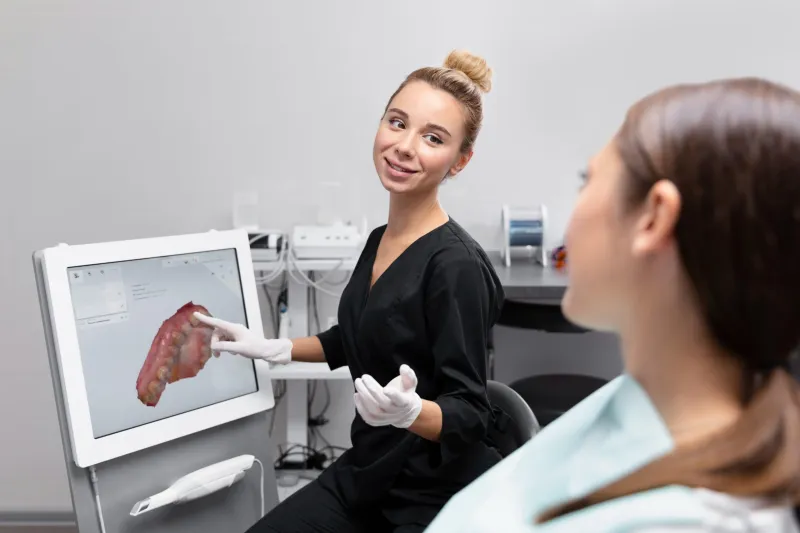
This requires a treatment philosophy that is as much artistic as it is clinical. Successful smile restoration begins with a careful analysis of what has changed and what the patient's natural smile once expressed. Photographs, digital smile design tools, and detailed consultations all contribute to a portrait of the smile's history and its potential.
Porcelain veneers and crowns are among the most versatile tools available for reversing visible dental aging. When crafted with precision, these restorations can rebuild lost enamel volume, restore the natural arc of the biting edges, and return a depth of color and translucency that mirrors the appearance of healthy, younger teeth. The craftsmanship involved is considerable — the difference between a restoration that looks natural and one that looks artificial lies almost entirely in the skill and material choices of the dental team.
Teeth whitening, whether performed in-office or through a carefully supervised take-home protocol, addresses the discoloration that results from years of dentin exposure and surface staining. For many patients, whitening alone produces a meaningful visual shift. For others, it serves as a foundation upon which more comprehensive restoration is built.
Gum contouring and periodontal care address recession and uneven gumlines that contribute disproportionately to an aged appearance. Restoring a healthy, symmetrical gumline can dramatically change the perceived age of a smile, often with less intervention than patients anticipate.
Dental bonding offers a more conservative option for patients with minor wear, chipping, or discoloration. Applied with artistry, composite resin can rebuild subtle contours and restore the visual character of a smile without the commitment of full veneers.
The Conversation Worth Having
Many patients arrive at a cosmetic dental consultation uncertain of what they want beyond a vague sense that something has shifted. They describe feeling that their smile used to feel more like them. This is not an unusual or superficial concern — it reflects a genuine perceptual reality. The smile is one of the most socially consequential features of the human face, and when it falls out of alignment with a person's energy and identity, the effects are felt in professional settings, social interactions, and private moments of self-reflection alike.
The first step is simply a conversation — one in which the full picture of a patient's dental history, lifestyle, and aesthetic goals can be understood in context. From there, a thoughtful treatment plan can be developed that addresses the specific mechanisms of aging at work in that individual smile.
A Final Thought
Dental aging is not a uniform process, and it is not irreversible. The gap between how your teeth have aged and how the rest of you presents to the world is one that skilled, patient-centered dentistry is uniquely positioned to close. At Artisan Dental Studio, we believe that your smile should be a faithful reflection of your vitality — not a contradiction of it. If that mismatch has been quietly troubling you, it may be time to explore what restoration, with the right artistic and clinical vision, can genuinely accomplish.