Borrowed Smiles Don't Fit: Why Your Personality Deserves Its Own Dental Design
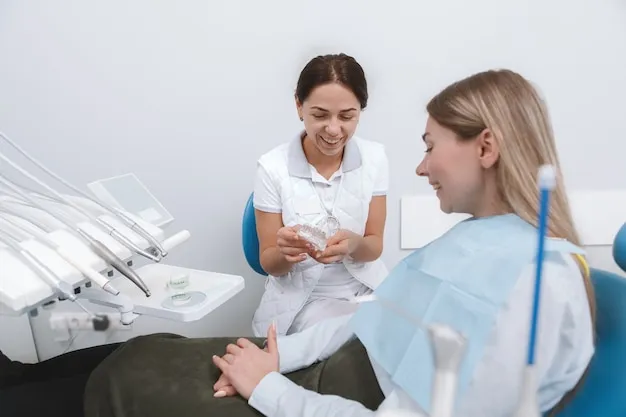
Photo: woman smiling naturally in dental consultation discussing personal style with dentist, via img.freepik.com
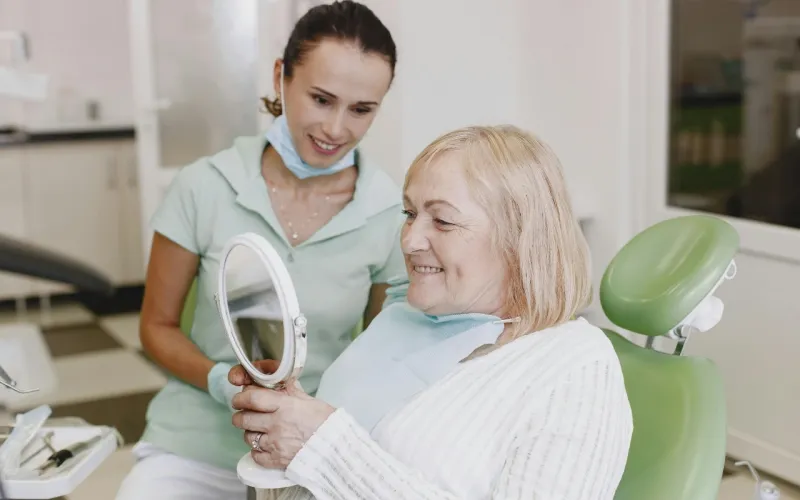
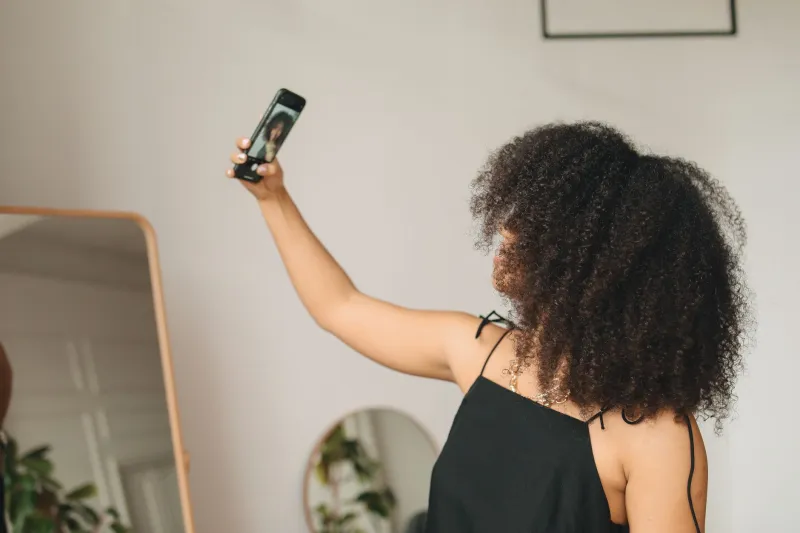
There is a particular moment that occurs in cosmetic dental consultations across the country with striking regularity. A patient settles into the chair, reaches for their phone, and presents an image—a celebrity's red-carpet grin, a social media influencer's luminous row of teeth, a screenshot pulled from a curated collection of aspirational smiles. The implicit request is clear: I want that.
The impulse is entirely understandable. We live in a visual culture saturated with images of idealized beauty, and the smile has become one of its most prominent currencies. Yet this approach to cosmetic dentistry carries a quiet but consequential flaw: those smiles were designed—whether by nature or craft—for someone else's face, someone else's bone structure, and, perhaps most importantly, someone else's personality.
At Artisan Dental Studio, the guiding philosophy holds that a smile is not merely a cosmetic feature to be optimized in isolation. It is an expression of identity. And designing one without first understanding who wears it is not artistry—it is imitation.
The Problem With Pinterest Dentistry
Digital platforms have democratized access to inspiration, and in many respects, that is a gift. Patients arrive better informed, more visually literate, and more engaged in their own care than ever before. But inspiration and prescription are different things, and confusing the two leads to outcomes that look polished in photographs yet feel subtly misaligned in real life.
Consider the mechanics of what makes a smile compelling. Researchers in dental aesthetics and facial psychology have long established that the most attractive smiles are those that harmonize with their surrounding features—the width of the jaw, the curve of the lips at rest, the proportional relationship between the upper central incisors and the face's midline. A smile engineered for a narrow, angular face will read differently on someone with softer, rounder features. The same shade of brilliant white that photographs beautifully on a particular skin tone may appear stark or artificial on another.
Beyond the structural, there is the matter of personality. A smile communicates before a single word is spoken. It signals warmth or reserve, playfulness or gravitas, approachability or quiet authority. When the smile a patient has chosen does not correspond to the energy they naturally project, the result is a subtle but persistent visual dissonance—the dental equivalent of wearing a costume rather than clothing.
Authenticity as an Aesthetic Standard
The concept of authenticity is sometimes dismissed as abstract, more suited to a therapy session than a dental operatory. In practice, however, it translates into very concrete clinical decisions.
A patient who is by nature exuberant, expressive, and quick to laugh may find that a perfectly symmetrical, uniformly white smile feels inert—too controlled, too composed for the face that wears it. Slight variations in tooth shape, a touch of natural translucency at the incisal edges, or a smile arc that follows the natural curvature of the lower lip can restore vitality to a result that might otherwise read as generic.
Conversely, a patient whose personality tends toward precision, understated elegance, and careful self-presentation may find that a smile designed with dramatic proportions or high contrast feels like overstatement. For them, refinement lies in subtlety—in the quiet confidence of a result that enhances without announcing itself.
Neither approach is superior. Both are correct when they are correct for the individual. The challenge—and the craft—lies in identifying which direction serves each patient before any irreversible treatment begins.
What a Genuine Consultation Looks Like
At Artisan Dental Studio, the consultation process is deliberately structured to resist the pull of trend-driven requests. This does not mean dismissing a patient's reference images; it means contextualizing them. When a patient presents a photograph of a smile they admire, the more productive questions are why they admire it and what specifically appeals to them. Is it the brightness? The symmetry? The sense of ease the person projects when they smile? Often, what a patient is truly seeking is a feeling—confidence, approachability, youthfulness—rather than a specific set of dental dimensions.
From that starting point, the conversation expands. How does the patient typically present themselves professionally? What does their social environment look like? Do they value standing out or fitting in? Are they drawn to bold, graphic aesthetics or to quiet, organic ones? These are not tangential questions. They are the raw material from which a genuinely personalized smile design is constructed.
Clinical assessment follows naturally from this foundation. Facial proportion analysis, lip dynamics, gum architecture, and the existing characteristics of the patient's dentition all inform what is possible and what is appropriate. The goal is not to override the patient's natural features but to work in concert with them—enhancing what is already present, correcting what is genuinely problematic, and resisting the urge to impose an external standard where none is warranted.
The Difference Between Looking Perfect and Feeling Like Yourself
There is a distinction that experienced cosmetic dentists learn to recognize over time: the difference between a result that photographs well and a result that the patient actually inhabits comfortably. The former is achievable through technical precision alone. The latter requires something more.
Patients who receive smiles designed around their personalities rather than around prevailing trends tend to report a different quality of satisfaction. They do not describe their result as a transformation so much as a clarification—as though something that was always present has simply been made more visible. They smile more freely, not because they have been given a reason to perform but because the smile they see in the mirror feels continuous with who they already are.
This is the standard Artisan Dental Studio holds itself to: not the smile that earns the most compliments in the abstract, but the smile that earns the most authentic expression from the person wearing it.
Designing for You, Not for the Algorithm
The images that circulate on social media and celebrity platforms are not inherently misleading—they are simply incomplete. They present outcomes without context, results without process, faces without the stories behind them. Using them as a direct template for your own cosmetic dentistry is a bit like selecting a home purely based on its exterior photograph: you may love the look and find, upon moving in, that the layout never quite suited how you actually live.
A smile that reflects your personality is not a compromise. It is, in fact, the higher ambition—one that requires more careful thought, more nuanced conversation, and a greater degree of clinical artistry than simply replicating what is currently in vogue. It is also, ultimately, the result you will live most comfortably with, not just in the first weeks of novelty but across the years that follow.
At Artisan Dental Studio, that is precisely the result we are in the business of creating.