Bright Teeth, Broken Harmony: Why Surface Whitening Alone Cannot Deliver the Smile You Imagined
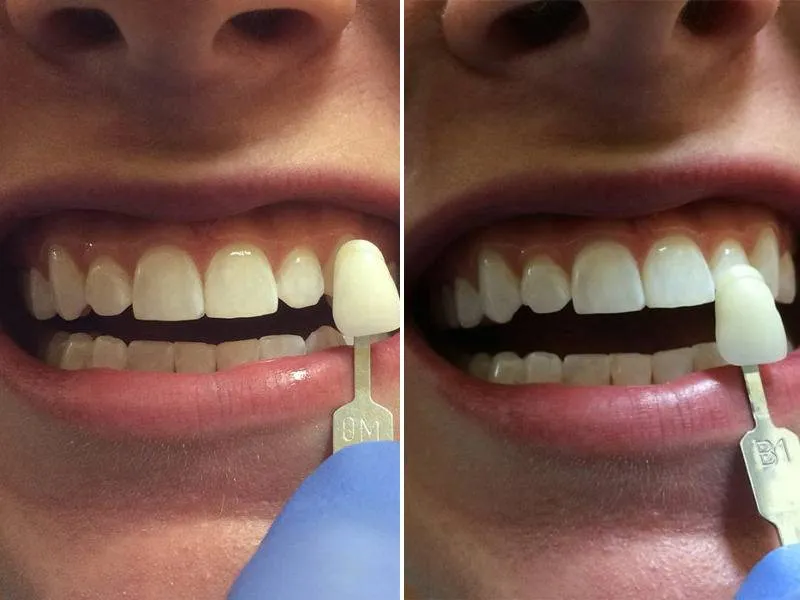
Photo: dental cosmetic consultation smile assessment teeth whitening before after studio, via www.dochefamilydental.com
There is a particular kind of disappointment that arrives not with dramatic fanfare but as a quiet, nagging feeling—the sense that something still isn't right, even after you have done everything you were told to do. For a surprising number of dental patients across the country, that feeling surfaces after teeth whitening. The shade is brighter. The photographs look better. And yet, standing in front of the mirror, the smile still does not feel entirely theirs.
This experience is not a failure of imagination, nor is it the result of unrealistic expectations. It is, in most cases, the predictable consequence of treating a single element of a deeply interconnected system.
The Composition Problem in Cosmetic Dentistry
Consider how a portrait painter approaches a canvas. No competent artist would spend hours perfecting the luminosity of a subject's eyes while ignoring the structural relationship between the jaw, the brow line, and the overall proportions of the face. Light and color matter enormously—but they serve the composition. Removed from that context, even the most technically brilliant brushwork produces something that feels visually incomplete.
The same principle applies with equal force to the human smile. Teeth do not exist in isolation. They occupy a precise architectural space defined by the jaw, the gum tissue, the lips, and the occlusal relationship—the way upper and lower teeth meet when the mouth closes. When one element of this system is altered without accounting for the others, the result is a cosmetic improvement that lacks coherence. Brighter, certainly. Balanced, not necessarily.
Teeth whitening is among the most accessible and frequently performed cosmetic dental procedures available. It is also, by design, a surface-level intervention. It addresses pigmentation. It does nothing for proportion, alignment, or the functional dynamics that give a smile its underlying structure.
What the Bite Is Actually Doing
The term bite refers to occlusion—the manner in which the upper and lower teeth contact one another during chewing, speaking, and rest. A well-calibrated bite distributes pressure evenly across the dental arch, supports proper jaw positioning, and contributes to the symmetry that the eye reads, often subconsciously, as attractive.
When the bite is misaligned—whether due to crowding, uneven wear, a shifted midline, or a skeletal discrepancy—the effects ripple outward in ways that no whitening treatment can correct. Teeth that are brilliantly white but noticeably uneven in length will still draw the eye toward asymmetry. A midline that drifts to one side will still interrupt the visual balance of the face, regardless of how many shades lighter the enamel becomes. Worn edges that flatten the incisal profile will continue to age the appearance of the smile, even when the color is pristine.
Functionally, an unaddressed bite problem can also accelerate the very deterioration that cosmetic treatments are meant to reverse. Excessive pressure on certain teeth, jaw tension, and uneven wear patterns do not pause because the enamel has been brightened. In some cases, whitening treatments applied to structurally compromised teeth can heighten sensitivity, making the cosmetic experience actively uncomfortable.
The Integrated Smile: A Systems-Level Perspective
At Artisan Dental Studio, the approach to cosmetic treatment begins with a foundational question: what is the relationship between all the elements of this smile, and how does each one affect the others? This is not merely philosophical framing—it is a clinical necessity.
A truly transformed smile requires what might be described as a systems-level perspective. The color of the teeth matters. So does their length, their angulation, the curve of the incisal edge, the position of the gum line, and the way the upper arch relates spatially to the lower. Each of these variables communicates something to the observer. Together, they either produce harmony or they do not.
When a patient presents primarily concerned with whitening, a thorough evaluation may reveal that bite correction, minor alignment work, or gum contouring would dramatically amplify the result of any color treatment. In some cases, these foundational adjustments are the difference between a smile that looks treated and one that looks transformed.
Why Patients Default to Surface Solutions
It would be unfair to suggest that patients who pursue isolated whitening treatments are making an uninformed choice. In a culture saturated with before-and-after imagery, whitening occupies a uniquely prominent position. It is visible, immediate, and relatively affordable. It photographs well. It generates social proof in the form of compliments and double-takes.
The marketing around whitening is also deliberately streamlined. Strip kits, in-office treatments, take-home trays—the messaging consistently emphasizes simplicity and speed. What it rarely communicates is the broader context in which color exists as just one variable among many.
There is also a psychological dimension worth acknowledging. Many patients approach cosmetic dentistry with a specific complaint in mind—my teeth are too yellow—without having the clinical vocabulary to articulate the fuller picture of what is bothering them. A skilled cosmetic dentist functions, in part, as a translator: helping the patient move from a surface-level concern to a more complete understanding of what their smile actually needs.
The Consultation as a Diagnostic Conversation
The most important step in any cosmetic dental journey is not the treatment itself—it is the conversation that precedes it. A comprehensive smile evaluation should examine not only the shade and condition of the enamel but the full structural and functional landscape of the mouth. Are the teeth proportionate to the face? Does the midline align with the facial centerline? Is there evidence of wear or shifting that suggests a bite problem? How does the smile behave in motion, not just in a static photograph?
These questions cannot be answered by holding up a shade guide. They require time, clinical expertise, and the kind of trained aesthetic sensibility that distinguishes a boutique practice from a transactional one.
For patients who arrive having already whitened their teeth and still feeling that something is missing, this conversation is especially valuable. It provides a framework for understanding why the result felt incomplete—and a pathway toward the more integrated transformation they were originally hoping to achieve.
Completeness Is the Goal
A smile that has been whitened but not redesigned is like a painting that has been cleaned but not restored. The surface is brighter. The underlying composition, however, remains exactly as it was.
The most enduring cosmetic results—the ones that patients describe not merely as improvements but as revelations—are those in which color, structure, function, and proportion have been considered together. This is the difference between a dental appointment and a dental design process. It is also the difference between a smile that looks better in photographs and one that finally feels, in the fullest sense of the word, complete.