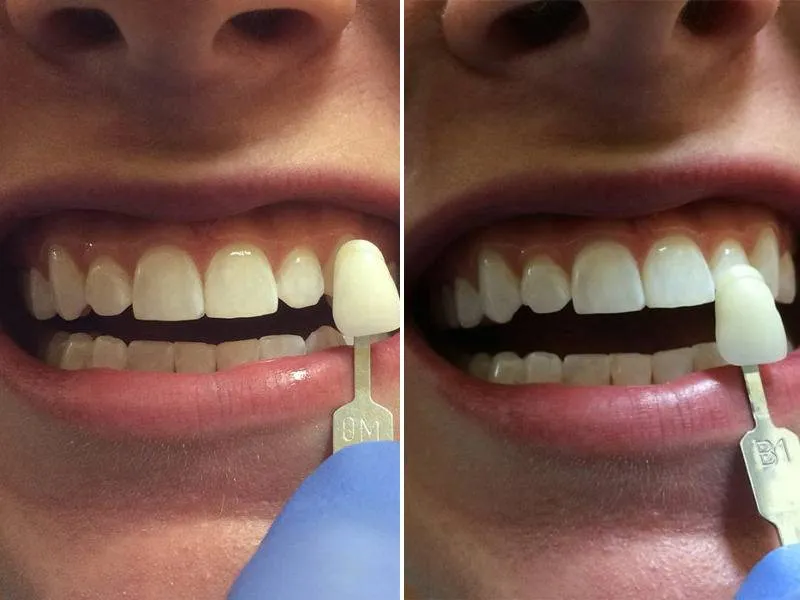
What Your Smile Is Actually Saying Versus What You Think You See
There is a particular kind of confidence that comes with knowing exactly what you want. Patients frequently arrive at cosmetic dental consultations having spent considerable time studying their own reflections, compiling a mental list of grievances — a slightly crooked incisor here, a shade too yellow there, perhaps a gap that has drawn self-conscious attention for years. That clarity feels useful. In practice, however, it is often the beginning of a more complicated conversation.
The truth is that the human eye, when trained on a familiar face — especially one's own — develops a series of blind spots. We fixate on what bothers us most emotionally, which is rarely the same as what a trained clinician identifies as the primary driver of a smile's appearance. The result is a diagnostic gap: patients arrive wanting one thing, and their smiles, upon careful examination, reveal an entirely different set of priorities.
Understanding that gap — and bridging it thoughtfully — is at the heart of what distinguishes genuinely artisan dental care from transactional cosmetic treatment.
The Mirror Is a Selective Editor
When you look at your own smile, your brain performs a remarkable act of selective editing. It highlights the features that carry emotional weight — the tooth you chipped in college, the slight discoloration you noticed in a wedding photograph, the gum tissue that seems to show too much when you laugh. These details feel significant because they are tied to memory and self-perception.
What the mirror rarely shows you is proportion. It does not easily reveal whether your midline — the vertical axis running between your two front teeth — is aligned with the center of your face. It does not flag the subtle wear patterns on your back molars that have caused your bite to shift incrementally over years, shortening your front teeth in the process. It does not explain why one side of your smile looks slightly fuller than the other, or why your lower lip no longer follows the curve of your incisal edges the way it once did.
These are not small details. They are frequently the architectural reasons a smile looks "off" in photographs, even after whitening, even after straightening, even after addressing everything on the patient's original list.
Cosmetic Desires Versus Clinical Needs
One of the most important conversations in a comprehensive smile consultation involves drawing a careful distinction between what a patient wants and what the smile genuinely requires. These two categories are not always in conflict — but they are almost never identical.
Consider a patient who presents requesting veneers on their front four teeth to improve color and shape. Upon examination, a skilled clinician may observe that the patient's bite is slightly off — perhaps a result of years of unconscious clenching — and that this functional issue has caused measurable wear on the very teeth the patient wants to restore. Placing veneers without addressing the underlying bite problem does not solve anything. It simply installs an expensive restoration on an unstable foundation, one that may chip, fracture, or wear unevenly within a few years.
Alternatively, a patient who comes in convinced they need gum surgery to address what they perceive as a "gummy smile" may, in fact, have a jaw positional issue that makes the gums appear excessive when the lips are relaxed. In such cases, addressing the gum tissue alone would be treating a symptom while leaving the cause entirely intact.
This is not a criticism of patients — it is simply a reflection of how limited our self-diagnostic tools are. We perceive our smiles through a lens of familiarity, memory, and emotion. Clinical evaluation perceives them through measurement, proportion, and function.
The Diagnostic Eye: Where Art and Science Converge
A comprehensive smile assessment is, in many respects, an act of visual translation. The clinician must interpret what the patient describes, observe what the patient cannot see, and reconcile both with what the clinical data reveals. This requires both scientific precision and something closer to an artist's eye.
Facial proportion analysis, for instance, examines the relationship between the upper and lower thirds of the face, the width of the smile relative to the width of the face, and the symmetry of features above and below the lip line. Golden ratio principles — long used in classical portraiture and architecture — have meaningful applications in smile design, helping practitioners identify why a smile reads as harmonious or discordant even before the patient can articulate the reason.
Dental photography plays an equally important role. Photographs taken from multiple angles, under consistent lighting, reveal asymmetries and disproportions that are nearly invisible in a bathroom mirror. Many patients, upon seeing a clinical photograph of their own smile for the first time, are genuinely surprised — not by how bad things look, but by how different the reality is from their internal image.
Occlusal analysis — the study of how the upper and lower teeth meet — adds another critical layer. Bite relationships affect not only function but aesthetics. An open bite, a deep overbite, or a crossbite can distort the appearance of an otherwise healthy smile in ways that no amount of cosmetic work will correct without first addressing the underlying mechanics.
Reordering the Priority List
When the diagnostic process reveals a different picture than the patient anticipated, the path forward requires honest, collaborative communication. A patient who came in expecting to discuss whitening may leave with an understanding that their primary aesthetic concern — a smile that looks older and more worn than they feel — is actually rooted in years of enamel loss caused by acid erosion or nighttime grinding.
This reordering of priorities is not a disappointment. It is, in fact, the most valuable outcome of a thorough consultation. It means that any treatment undertaken will be grounded in an accurate understanding of the problem — which is the only reliable path to a result that is both beautiful and durable.
The artisan approach to dentistry holds that a smile is not a collection of isolated teeth to be addressed one complaint at a time. It is a system — functional, structural, and aesthetic — that must be understood as a whole before any single element is changed. The patient's wishes are always heard and deeply respected. But they are considered alongside the clinical story the smile is telling, which is sometimes a very different narrative.
Seeing Your Smile Clearly for the First Time
There is something quietly revelatory about a well-conducted smile consultation. Patients who arrive with a narrow list of complaints often leave with a broader, more accurate understanding of their own dental health — and, frequently, a greater sense of possibility than they had walking in.
When what you want and what you need are brought into alignment, treatment becomes something more than a cosmetic transaction. It becomes a considered, intelligent investment in a smile that will serve you well — aesthetically and functionally — for years to come.
The mirror shows you what you expect to see. A skilled clinician shows you what is actually there. The difference between those two perspectives is where genuinely transformative dental care begins.